What adds the most value in a kitchen remodel depends on what you mean by “value.”
If you're planning to sell soon, you may be focused on how much of the remodeling cost you can recover at resale. If you expect to live in your home for another five, ten, or twenty years, value also includes how well the kitchen works for you every day.
Those goals don't always lead to the same remodeling decisions.
A modest update to a functional kitchen may produce a stronger percentage return at resale than rebuilding the entire room. But if the kitchen has poor circulation, inadequate storage, an undersized work area, or a layout that no longer fits the household, replacing finishes alone won't solve the underlying problem.

The most valuable kitchen remodel is usually the one that identifies what is limiting the room now and invests where the changes will make a meaningful difference.
What Kitchen Improvements Add the Most Value?
For most homeowners, the strongest kitchen investments fall into four categories:
Layout and function: Improving circulation, work zones, storage, seating, or the relationship between the kitchen and surrounding rooms.
Cabinetry and storage: Correcting inadequate or inefficient storage while establishing much of the kitchen's visual character.
Durable surfaces and fixtures: Choosing countertops, flooring, plumbing fixtures, and other heavily used materials that can withstand years of daily use.
Overall condition: Replacing worn, damaged, or noticeably dated components that make the kitchen feel poorly maintained.
Which category deserves the most investment depends on the existing kitchen.
A kitchen with an effective layout but dated cabinet doors may need relatively little intervention. A kitchen with an awkward peninsula blocking circulation may require a much more substantial redesign.
That's an important distinction because more expensive does not automatically mean more valuable. The goal is to spend where the home and the people living in it will benefit.

1. Start With the Kitchen Layout
Before choosing countertops, cabinets, appliances, or tile, look at how the kitchen actually works.
Can two people cook without constantly crossing paths? Is the refrigerator easily accessible? Is there enough preparation space near the sink and range? Can someone sit at the island without obstructing a walkway? Is frequently used storage located where it makes sense?
These problems affect the kitchen every day, which is why layout can be one of the most consequential parts of a remodel.
Sometimes the existing layout is already good. In that case, keeping it may preserve more of the remodeling budget for cabinetry, countertops, appliances, lighting, and other improvements.
Other homes need a more significant change.
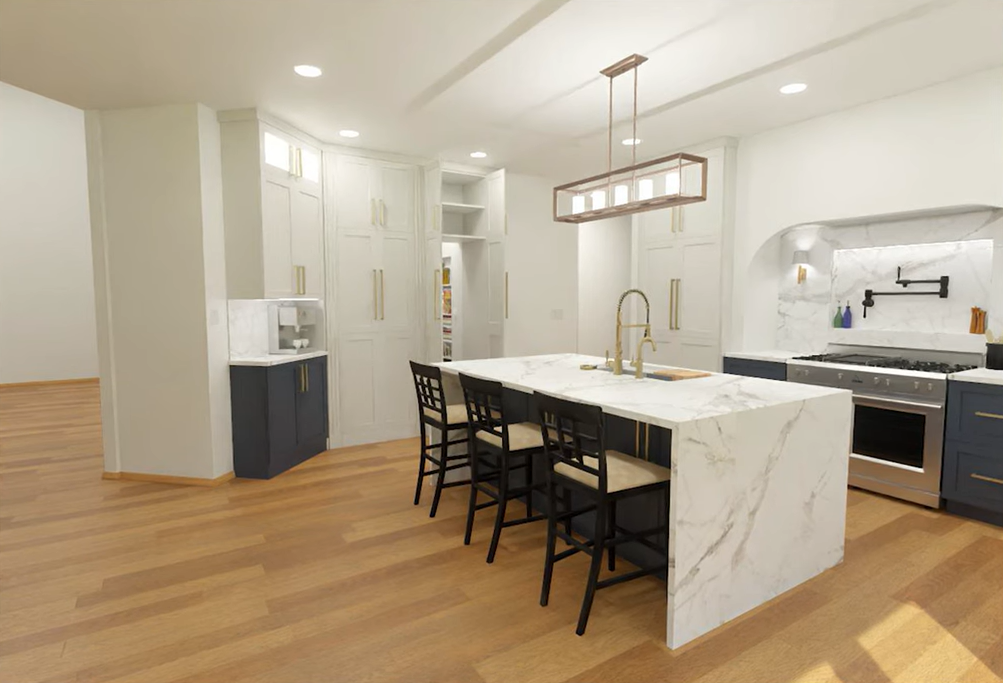
The Bolton kitchen remodel is one example. Rather than treating the existing kitchen footprint as a fixed boundary, the design incorporated an underused dining nook into the kitchen. The change provided more usable space and addressed a limitation that new finishes alone could not have corrected.
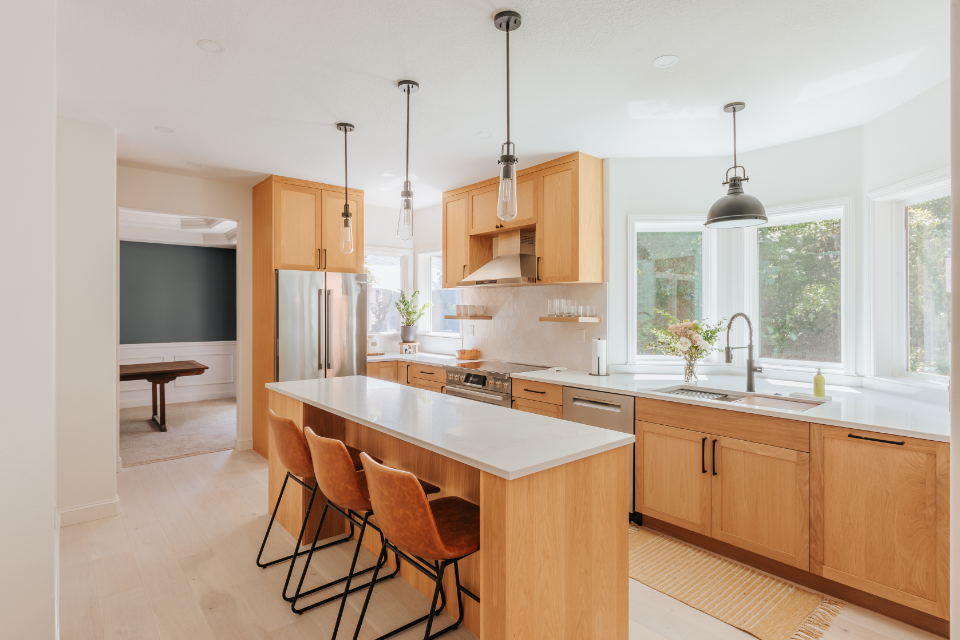
That is the kind of decision worth making before asking which countertop or cabinet style has the best resale value.
If you're considering changing the footprint of the room, our guide to kitchen layouts provides a useful starting point for comparing common configurations.
2. Invest in Cabinetry Where It Makes a Difference
Cabinetry occupies a large percentage of the visible kitchen, but its value goes well beyond appearance.
Well-planned cabinetry can eliminate wasted corners, provide dedicated storage for frequently used items, improve countertop organization, and make a smaller kitchen considerably easier to use.
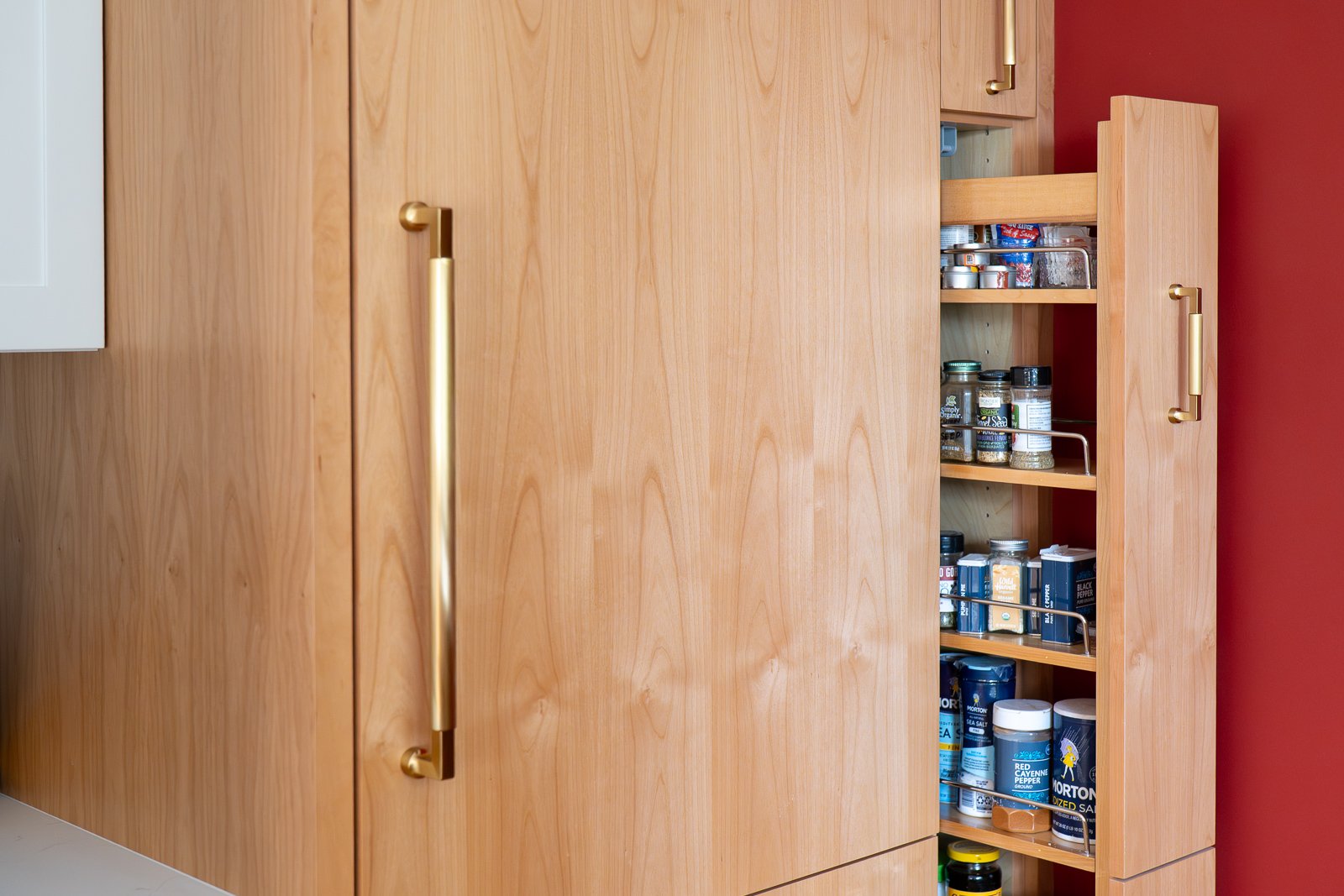
That doesn't mean every kitchen needs completely new cabinets.
If the existing cabinet boxes are well built, appropriately located, and provide enough storage, refinishing or refacing may make sense. If the existing cabinets are poorly configured, damaged, undersized, or preventing a better layout, replacement gives the design team more freedom to solve those problems.
The decision should begin with what the cabinetry needs to accomplish rather than an assumption that replacement is always better.
For homeowners comparing those approaches, cabinet refacing versus replacement can help clarify when keeping existing cabinetry makes sense.
3. Choose Countertops for Durability, Maintenance, and the Home
Countertops have an outsized visual presence in a kitchen, but their real value comes from how well they perform over years of use.
Quartz remains popular because it offers a broad range of designs with relatively simple maintenance. Natural stones such as granite and marble provide characteristics that engineered materials cannot exactly reproduce, but they come with different maintenance considerations.
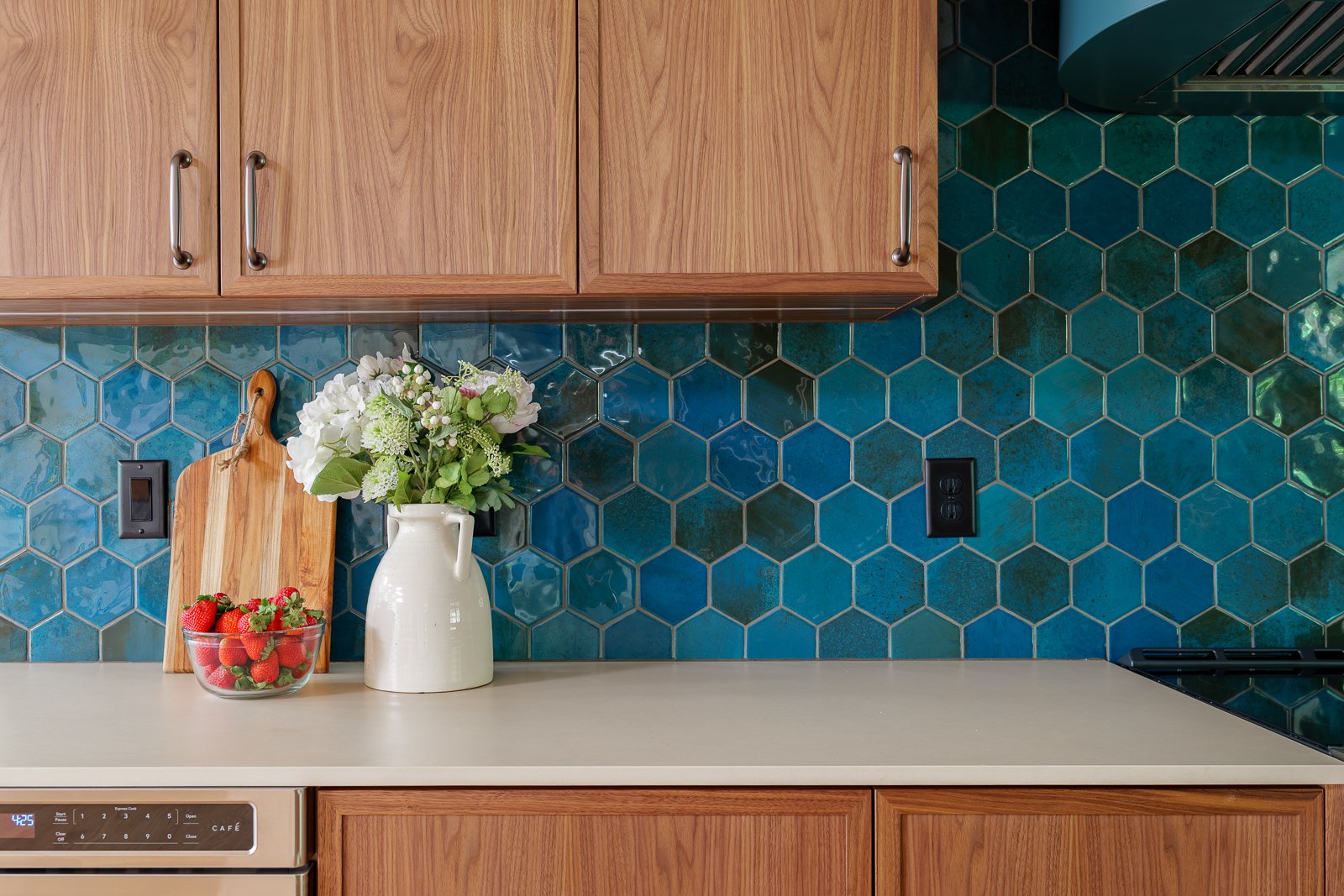
There isn't one countertop material that automatically adds the most value to every kitchen.
The better question is whether the material makes sense for the homeowner, cabinetry, architecture, expected maintenance, and overall level of investment in the house.
Our comparison of quartz versus marble countertops covers the differences in durability, maintenance, appearance, and cost in greater detail.
Be cautious about choosing a countertop primarily because you believe future buyers expect it. A material that photographs well but frustrates you for the next decade is unlikely to be the best investment in your home.
4. Add an Island When the Kitchen Has Room for One
Kitchen islands can add preparation space, storage, seating, and a natural gathering point. In the right room, an island can fundamentally change how the kitchen functions.
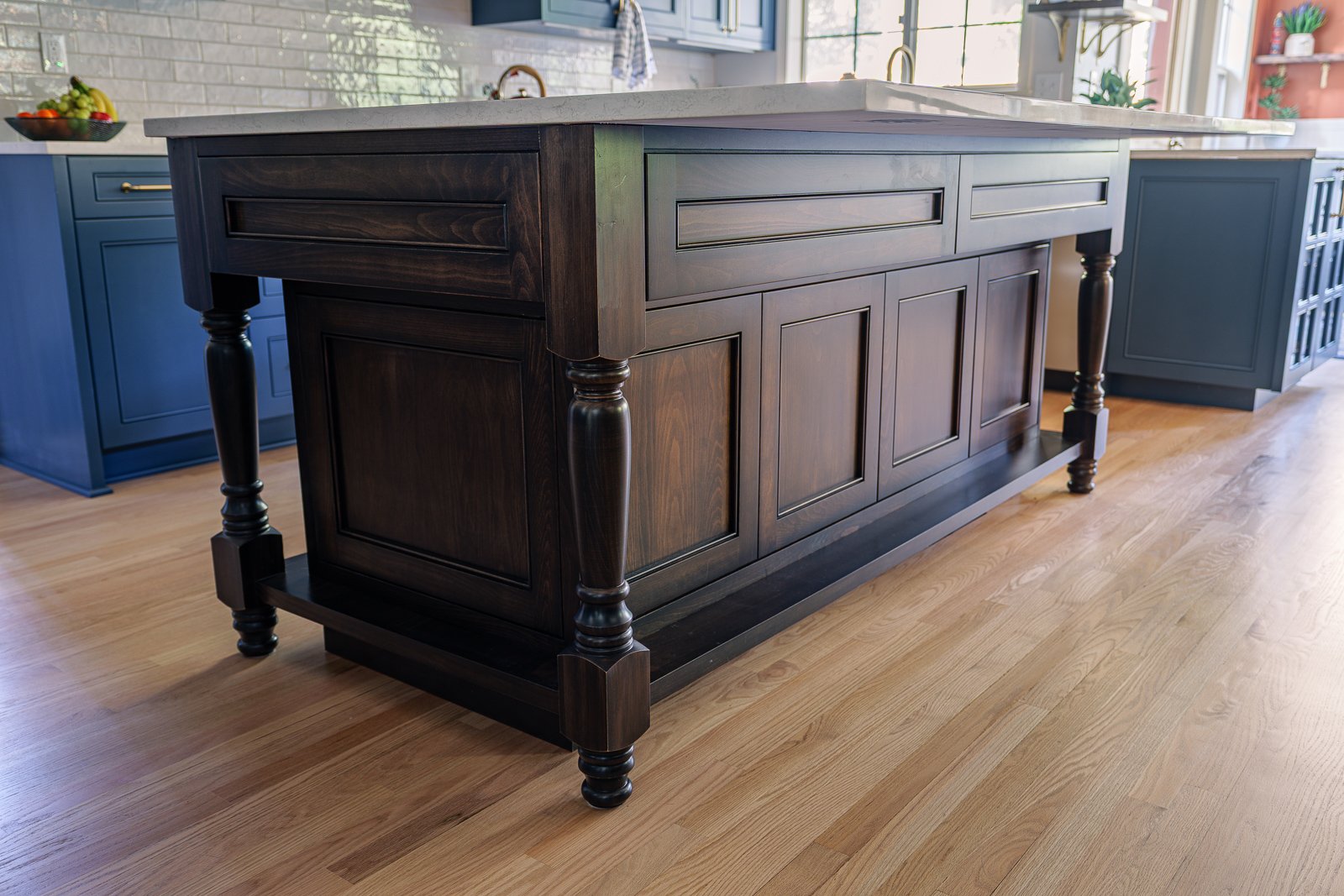
In the wrong room, it can make circulation worse.
The value of an island depends heavily on scale and clearance. Making an island larger simply because space appears available can create narrow walkways, appliance conflicts, and uncomfortable seating.
Before adding one, determine what the island is actually supposed to do.
Is it primarily a preparation surface? Does it need a sink? Should it provide seating? Is additional storage the priority? Will it separate the working kitchen from an adjacent living space?
Those decisions should determine its dimensions.
Our article on choosing the right kitchen island size explains the clearances and functional considerations involved.
5. Don't Assume Expensive Appliances Create an Equal Return
Appliances are one of the easiest places to confuse cost with value.
A high-performance range, larger refrigerator, built-in refrigeration system, or specialty appliance can absolutely be worthwhile for someone who will use it. But expensive appliances don't automatically increase a home's resale value by an equivalent amount.
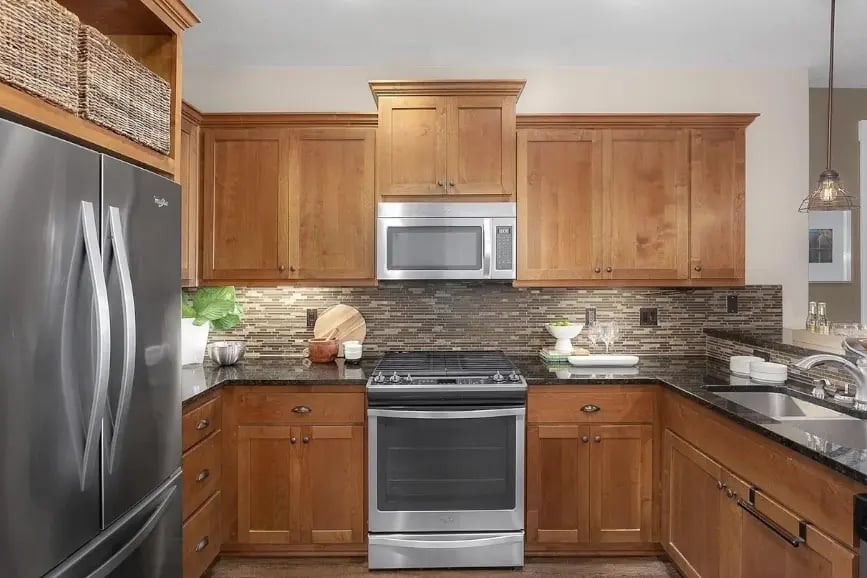
Think about appliances in terms of the way you cook.
Someone who regularly cooks for a large family may benefit from a larger range, additional refrigeration, or a second oven. Someone who cooks only occasionally may receive very little practical benefit from the same investment.
There is also a design consideration. Appliances influence cabinetry dimensions, electrical and gas requirements, ventilation, and circulation. They should be selected early enough that the kitchen can be designed around their actual requirements.
Our guide to choosing appliances for a kitchen remodel covers those planning considerations in more detail.
6. Improve Lighting Before Treating It as Decoration
Lighting has a direct effect on how well a kitchen works.
A good lighting plan typically uses several types of light rather than relying on one fixture in the middle of the ceiling.
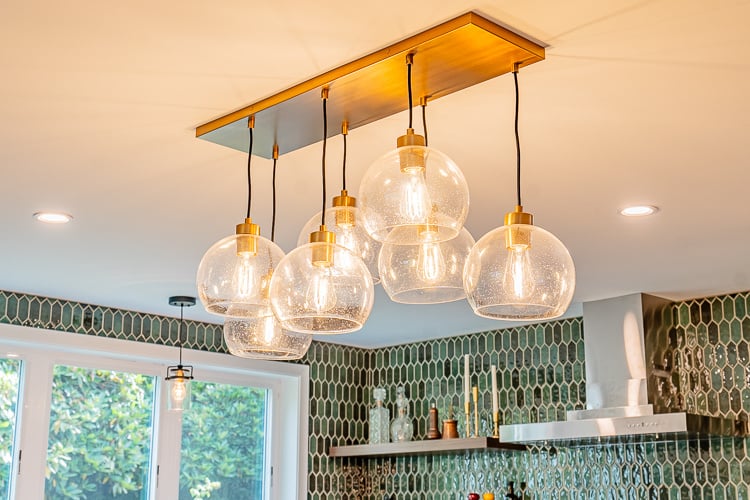
Ambient lighting provides general illumination. Task lighting makes work surfaces easier to use. Decorative lighting can provide visual emphasis where appropriate.
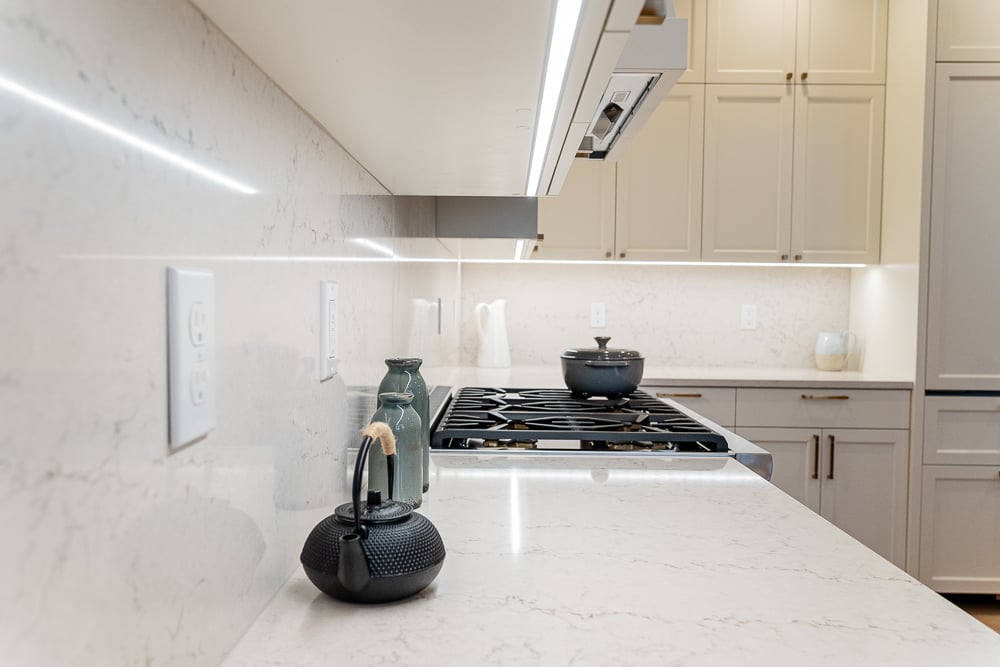
Under-cabinet lighting can be particularly useful because upper cabinets often block ceiling fixtures from adequately lighting countertops.
Lighting decisions also need to happen early. Fixture locations, switching, cabinetry, electrical work, ceiling conditions, and the kitchen layout all affect one another.
That makes lighting part of the design rather than something to choose after everything else is finished.
7. Pay Attention to the Improvements Buyers Notice for the Wrong Reasons
Not every valuable improvement creates a dramatic before-and-after photograph.
Sometimes value comes from eliminating things that make buyers question the condition of the home.
Damaged flooring, deteriorated countertops, failing cabinet hardware, poor lighting, visibly worn cabinetry, inadequate ventilation, and unfinished repairs can all make a kitchen feel neglected.
Correcting those issues can be particularly important when resale is the primary goal.
A future buyer may not assign a specific dollar value to every improvement, but visible deferred maintenance can affect how they perceive the entire house.
Minor Kitchen Remodel vs. Major Kitchen Remodel: Which Adds More Value?
This is where homeowners need to distinguish percentage return from total improvement.
A smaller kitchen remodel can produce an attractive percentage return because the initial investment is lower. Painting or refacing cabinets, replacing hardware, updating lighting, installing new countertops, and replacing aging appliances can make a functional kitchen more appealing without rebuilding it.
That doesn't mean a minor remodel is always the better decision.
If the kitchen has fundamental problems with its footprint, circulation, storage, structural condition, or relationship to adjacent rooms, cosmetic improvements leave those problems intact.
A major remodel becomes more reasonable when solving the underlying problem requires moving walls, changing plumbing or electrical locations, replacing poorly configured cabinetry, expanding the kitchen, or reorganizing several connected spaces.
The right scope begins with the problem you're trying to solve.
Should You Open the Kitchen to Another Room?
Removing a wall between a kitchen and an adjacent dining or living area can improve circulation, daylight, sightlines, and the relationship between rooms.
It can also be unnecessary.
Open-concept design shouldn't be treated as an automatic upgrade.
Some homes benefit from separation between spaces. The existing wall may provide useful cabinetry, acoustic separation, furniture placement, or architectural character. Removing it may also require structural work that adds considerable cost.
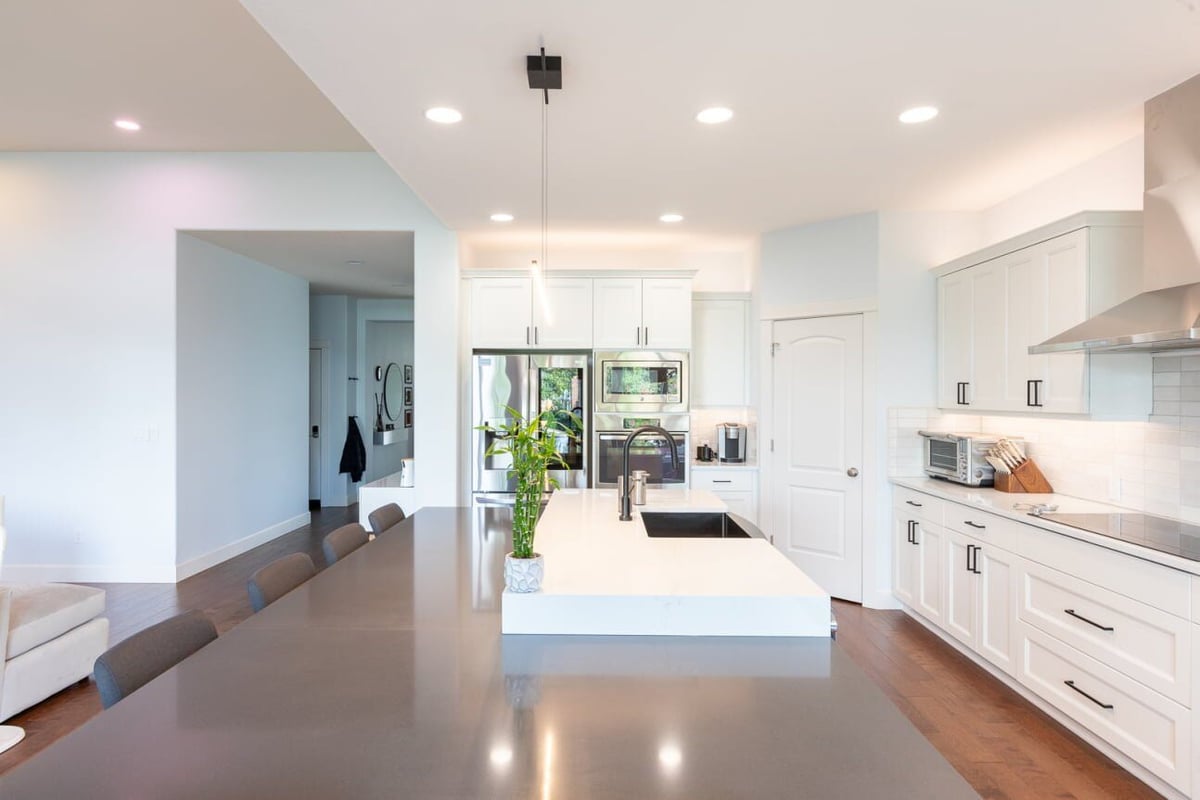
The King Foursquare kitchen remodel demonstrates how changing the relationship between spaces can be valuable when the existing configuration is genuinely limiting the home. The important part isn't simply that a wall changed. It's that the design decision addressed how the space needed to work.
Before removing a wall, ask what specific problem its removal solves.
How Much Should You Spend on a Kitchen Remodel?
There isn't a universal percentage of home value that every homeowner should spend.
A kitchen remodel should be evaluated in the context of the house, neighborhood, project goals, existing condition, and how long you expect to live there.
A homeowner preparing to sell in a year has a very different investment calculation from someone planning to remain in the home for another fifteen years.
If resale is imminent, restraint usually matters more. Spending heavily on personalized features may not give future buyers enough additional value to justify their cost.
For a long-term homeowner, the calculation changes.
If a redesigned kitchen makes cooking easier, gives a family a better place to gather, provides the storage they've lacked for years, or solves a layout problem they experience several times every day, some of the return happens long before the house is sold.
That value won't appear completely on an appraisal.
Which Kitchen Upgrades May Not Pay Off?
The greatest risk isn't necessarily choosing an expensive material. It's investing heavily in something that doesn't solve an important problem or fit the house.
That can include professional appliances that won't be used, an oversized island that compromises circulation, elaborate cabinetry that provides little additional storage, structural changes without a meaningful functional benefit, or highly personalized finishes selected primarily for novelty.
It can also mean remodeling beyond what the surrounding market reasonably supports when resale is the primary objective.
Good design involves deciding where not to spend.
The kitchen doesn't need the most expensive version of every material. It needs the right combination of layout, materials, storage, lighting, appliances, and details for the home and the people who live there.
Resale Value Isn't the Only Return on a Kitchen Remodel
National remodeling studies can estimate how much of a project's cost homeowners may recover when they sell. Those figures are useful, but they shouldn't be mistaken for a prediction of what a particular Portland home will sell for after remodeling.
There is another form of return that is harder to put into a spreadsheet.
A kitchen is used constantly.
If a remodel eliminates a bottleneck you've dealt with every morning, gives you enough storage to keep countertops clear, makes it easier for several people to cook together, or creates a better place for friends and family to gather, you're receiving value from the project every day you remain in the home.
For someone selling immediately, that may matter less.
For someone planning to stay for years, it should be part of the decision.
So, What Adds the Most Value in a Kitchen Remodel?
There isn't one cabinet, countertop, appliance, or feature that wins for every home.
If the existing kitchen functions well, targeted improvements may provide the strongest return for the amount invested.
If the kitchen doesn't work, correcting the layout, storage, circulation, and relationship to surrounding rooms can create considerably more meaningful long-term value than replacing surfaces while leaving the underlying problems untouched.
The best kitchen remodels prioritize the changes that matter most and show restraint everywhere else.
That may mean preserving an existing layout because it already works. It may mean spending more on cabinetry because storage is the kitchen's biggest weakness. Or it may mean expanding the room because the existing footprint simply cannot support the way the household uses it.
If you're considering a larger redesign, our kitchen remodeling services explain how design and construction are coordinated as one process.
Frequently Asked Questions
What kitchen upgrade adds the most value?
There isn't one upgrade that adds the most value to every kitchen. If the existing layout works, improvements to cabinetry, countertops, lighting, and worn finishes may provide a strong return without changing the footprint. If the layout itself is the problem, correcting circulation, storage, or usable workspace may have a greater impact on how the kitchen functions and how future buyers perceive it.
Is replacing kitchen cabinets worth it?
Replacing cabinets can be worthwhile when the existing cabinetry is damaged, poorly configured, lacks adequate storage, or prevents a better layout. If the cabinet boxes are well built and appropriately located, refinishing or refacing them may achieve the desired result with less work.
Does a kitchen island increase home value?
An island can improve a kitchen by adding workspace, storage, seating, or appliance locations. It adds value when the room has enough space to maintain comfortable circulation. An oversized island in a small kitchen can have the opposite effect.
Do expensive appliances increase home value?
Premium appliances can complement the expectations of some homes and buyers, but homeowners shouldn't assume they'll recover their full cost at resale. Their strongest value comes when their performance genuinely benefits the people using the kitchen.
Is a minor kitchen remodel better for ROI?
A minor remodel can produce a stronger percentage return because the initial investment is smaller. However, it won't correct fundamental problems with the layout, storage, structure, or footprint. The appropriate scope depends on the condition of the existing kitchen and the homeowner's goals.
Should I remodel my kitchen if I plan to sell?
It depends on the kitchen's current condition. Repairing damaged or noticeably dated components can make the home more appealing, but a major personalized remodel shortly before selling may be difficult to recover financially. When resale is the primary goal, the investment should be evaluated against comparable homes and buyer expectations in the local market.
Ready to Make Better Decisions About Your Kitchen?
A kitchen remodel doesn't start with deciding whether you want quartz or granite. It starts with determining what the existing kitchen does well, where it falls short, and what changes would meaningfully improve the way you use your home.
That may lead to a relatively straightforward update. It may uncover a layout problem worth solving. Or it may reveal an opportunity you hadn't considered when you first started thinking about the project.
Our kitchen remodeling process brings design and construction decisions together early enough to evaluate those tradeoffs before they become expensive changes during construction.
When you're ready to talk through what's possible in your kitchen, get in touch with our team to start the conversation.
Related Links
- Portland Kitchen Remodel: 3 Examples to Help You Budget
- Framed vs Frameless Cabinets
- How to Seal Granite Countertops and Marble Countertops