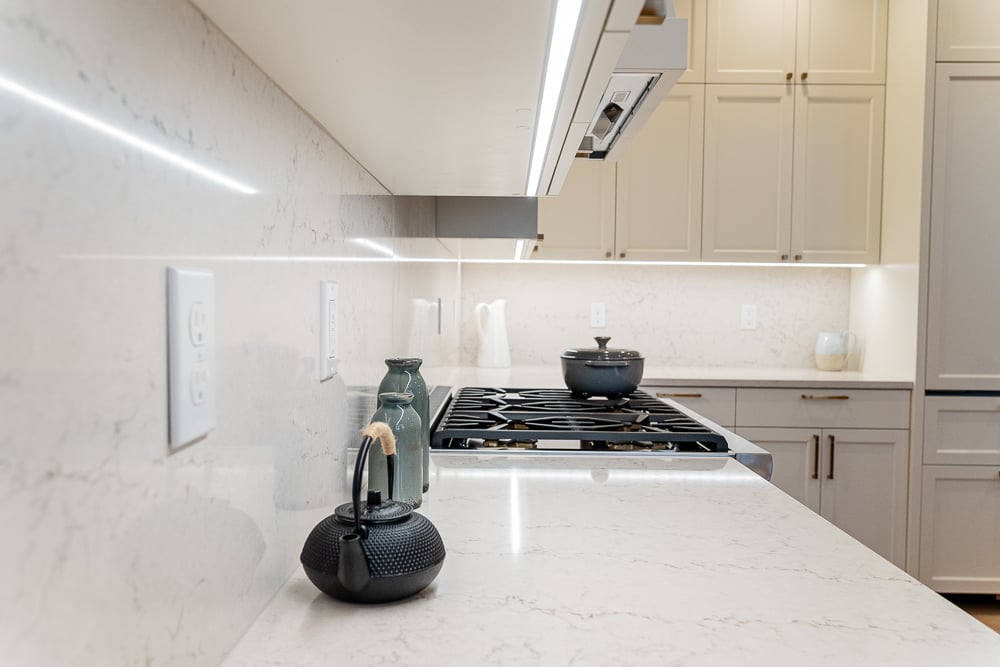
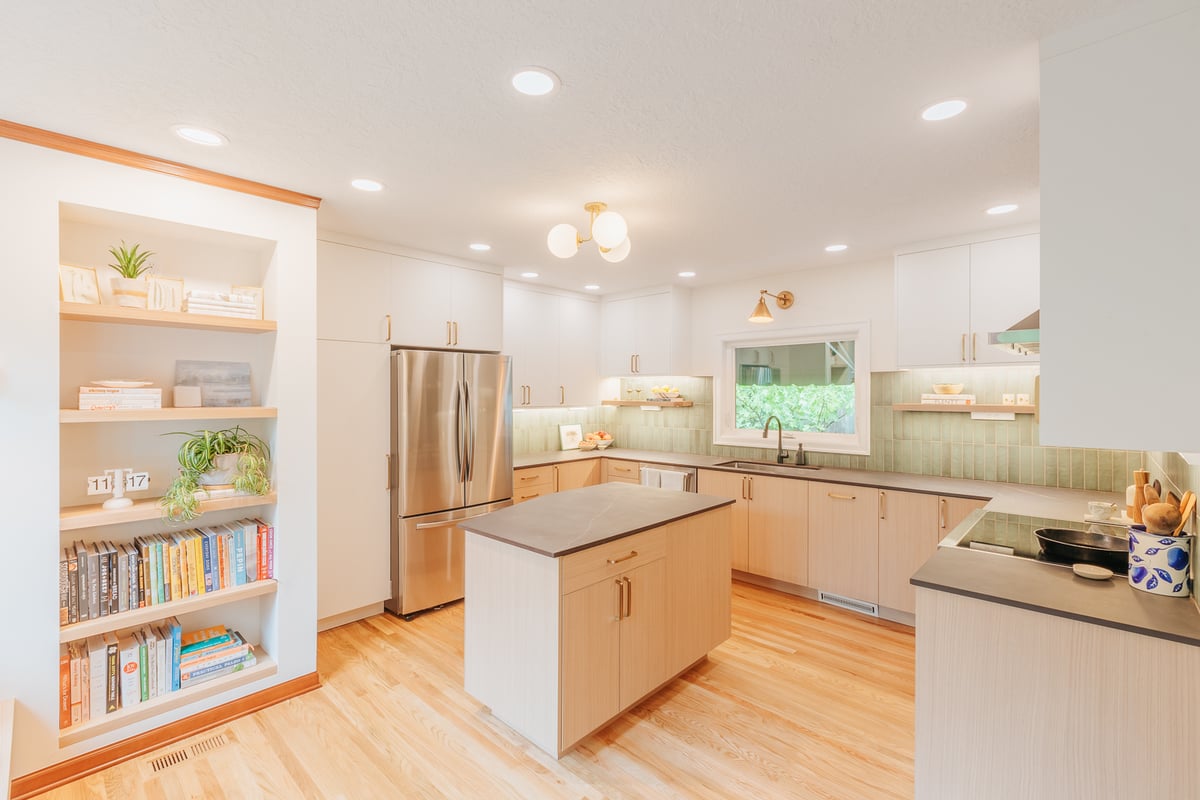
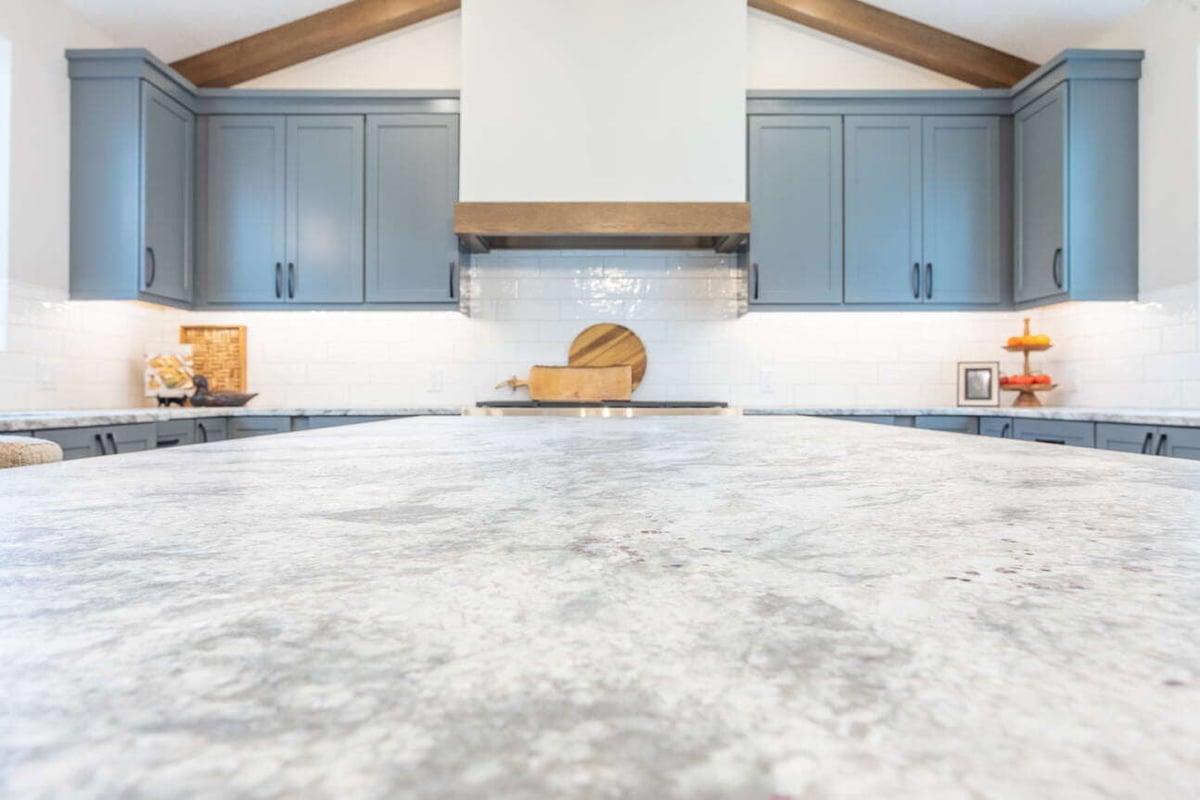
Want to learn more about countertops?
Our kitchen remodeling guide provides helpful information about countertop materials along with everything else needed to plan a remodel successfully.
-1.jpg) Joseph Patrick
Joseph Patrick
Natural stone countertops are often the most expensive surface in a kitchen, and sealing is the one piece of maintenance that determines how well they age. It's not complicated, it doesn't take long, and it's the difference between a counter that looks the same in ten years and one that carries a permanent ring from a coffee cup.
This covers which stones actually need sealing, how to tell when yours are due, which sealer to buy, and how to apply it.
Key Takeaways
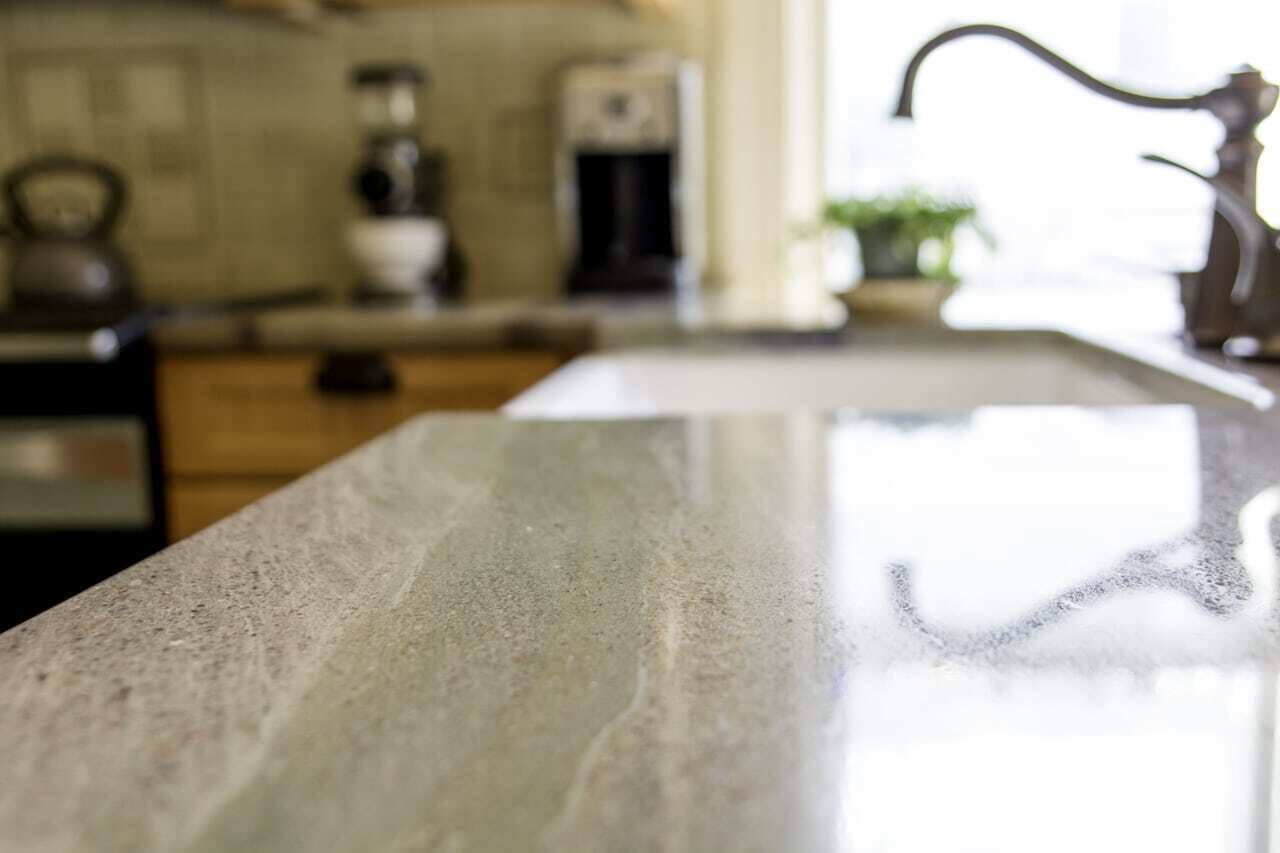
Not every countertop needs a sealer, and sealing the wrong material can do real damage.
| Material | Needs sealing? | Notes |
|---|---|---|
| Marble | Yes | Porous and prone to staining and etching. The most sealing-dependent common countertop. |
| Limestone | Yes | Softer and more porous than marble. Seal, and expect to reseal more often. |
| Travertine | Yes | Naturally pitted; sealing helps protect both the surface and the filled voids. |
| Granite | Usually | Less porous than marble, but most granites still benefit. Some dense varieties don't need it. |
| Quartzite | Usually | Natural stone despite the name similarity to quartz. Density varies widely by slab — test yours. |
| Soapstone | No sealer, but oil it | Non-porous and stain-resistant. Mineral oil is used to even out the patina, not to seal. |
| Quartz | No | Engineered with resin that already resists staining. Sealing can leave a hazy film. |
| Sintered stone (Dekton, Neolith) | No | Non-porous by manufacture. Nothing to seal. |
If you're not sure which you have — and granite and quartzite in particular get confused constantly — the water test further down will tell you what you need to know regardless of the label.
Considering countertops as part of a remodel? Explore our complete kitchen remodeling guide to learn more about countertops, cabinets, and appliances. We also cover planning your remodel and explain what your project could cost and why.
Both are, to different degrees, and that difference is the whole reason one needs sealing more often than the other.
Marble is noticeably porous. Dark liquids like red wine, coffee, and oil can move into the stone rather than sitting on top of it. Left long enough, even water will darken marble. Marble is also vulnerable to a second problem sealing doesn't solve: acidic liquids like lemon juice, vinegar, and wine chemically react with the calcium carbonate in the stone and leave a dull spot called an etch. A sealer slows absorption; it doesn't prevent etching.
Granite is porous but much less so. Its density varies a great deal between varieties — some granites absorb readily and need sealing annually, while dense ones absorb almost nothing. This is why a blanket rule doesn't work for granite and why testing your specific counter matters more than following a general recommendation.
Two tests, five to ten minutes, no special equipment.
Pour a small amount of water — a tablespoon or so — onto a clean section of the counter. Wait five minutes, then wipe it up.
If the stone underneath has darkened, the water is being absorbed and the counter needs resealing. If the water beads or sits on the surface and the stone looks unchanged, the existing sealer is still working.
A more sensitive version, useful when the water test is ambiguous. Put a few drops of mineral oil on an out-of-the-way spot. Wait about ten minutes, then wipe it away.
A dark spot means the stone is absorbing and it's time to seal. The mark from the test will fade on its own within an hour.
Run either test in a few different places. Counters wear unevenly — the area beside the sink and the stretch next to the cooktop almost always need sealing before the rest.
As a general rule, every one to three years. The honest answer is that it depends on three things:
Rather than tracking dates, run the water test every six months or so and seal when the counter tells you to. That's more reliable than any interval.
This is where most of the outcome is decided. Product selection matters more than technique.
Penetrating sealers, also called impregnators, soak into the stone and work below the surface. They don't change how the counter looks or feels, and they don't wear off from cleaning. This is what you want for a kitchen countertop.
Topical sealers form a layer on top of the stone. They can add shine, but they scratch, wear unevenly, and eventually need stripping and reapplication. They're a poor fit for a working countertop.
Water-based sealers have lower odor and VOCs, are easier to work with indoors, and are the better environmental choice. For most granite and for routine maintenance sealing, they're sufficient.
Solvent-based sealers penetrate deeper and generally offer longer protection, at the cost of stronger fumes and a need for real ventilation during application. They're worth considering for marble, for very porous stone, or when you want the longest possible interval between applications.
Expect to spend roughly $25 to $50 on a bottle of quality penetrating sealer, which is typically enough for a full kitchen with some left over. Professional sealing services exist and are worth considering for a large installation, extensive honed marble, or if you'd simply rather not — but for most homeowners this is a straightforward afternoon and the materials are the only real cost.
Sealer bonds to stone, not to what's sitting on top of it. Anything left behind gets sealed in.
Clear the counters completely and wipe them down. Apply a cleaner made for natural stone — not a general-purpose spray, and nothing acidic — and work it in, then polish with a microfiber cloth. Dry the surface completely.
Give it about 24 hours before sealing. The stone needs to be fully dry, not just surface-dry, and residual moisture in the pores will block the sealer from penetrating.
Application varies meaningfully between products — dwell time, number of coats, and whether a second coat is needed all differ. Read the bottle before you start.
Then test. Apply sealer to a small, out-of-the-way area, either sprayed or wiped on with a dry cloth. Wait the time the manufacturer specifies, usually about 15 minutes, wipe it off, and check for any discoloration or haze. If the test area looks unchanged, proceed.
Work in sections of a few square feet rather than trying to cover the whole counter at once — it's the only reliable way to get even coverage and to wipe each section off at the right time.
Apply evenly, making sure you're not leaving dry patches, particularly along edges and around the sink cutout where most absorption happens. Cover or mask faucets, and protect the backsplash if it's a different material.
Let the sealer sit for the specified dwell time, usually around five minutes, so it can absorb.
This step is the one people skip, and skipping it is what causes a hazy or streaky finish. Any sealer left on the surface after the dwell time will dry there.
Wipe the section down with a clean, dry cloth using a circular motion until the surface is dry to the touch and no residue remains. Use a fresh cloth as the one you're using becomes saturated.
If your product calls for a second coat, follow the timing on the bottle — some require several hours of curing between coats.
Most sealers need 24 to 48 hours to cure fully. During that window, keep the counters dry and avoid putting anything on them. Sealing correctly and then setting a wet glass down six hours later undoes a fair amount of the work.
Once cured, the counter is back in service. Wipe up spills promptly — sealer buys you time, not immunity — and clean with a stone-safe cleaner rather than anything acidic.
If you're thinking about sealing as part of choosing a countertop, you're probably weighing other materials too. Balancing cost, durability, and maintenance is a lot to sort through — especially when countertops are one decision among dozens in a kitchen or bathroom, and the material still has to work with the rest of your home.
We help dozens of Portland homeowners through material selection every year. That conversation usually starts before the material: how you actually use the space, how you want it to function, and what fits your budget and the way you live. The countertop decision gets easier once those questions are answered.
Schedule a conversation today to get started.
Do granite countertops need to be sealed? Most do. Granite is less porous than marble but still absorbs liquid, and sealing prevents staining. Some very dense granites — Ubatuba is a commonly cited example — absorb so little that sealing isn't necessary. The water test will tell you which you have.
Does marble need to be sealed? Yes. Marble is noticeably porous and stains readily from wine, coffee, and oil. Sealing is strongly recommended, though it won't prevent etching from acidic liquids, which is a chemical reaction rather than absorption.
Does quartz need to be sealed? No. Quartz countertops are engineered from stone combined with resin, and that resin already prevents absorption. Sealing quartz can leave a hazy residue that's difficult to remove.
Does quartzite need to be sealed? Usually yes. Despite the similar name, quartzite is natural stone, not engineered like quartz. Density varies significantly between slabs, so test yours rather than assuming.
Does soapstone need to be sealed? No. Soapstone is non-porous and doesn't stain. It's often treated with mineral oil, but that's to even out the natural darkening over time, not to seal it.
How often should you seal granite countertops? Generally every one to three years, depending on the stone's density, the quality of the sealer, and how heavily the counter is used. Rather than following a schedule, run the water test every six months and seal when the stone starts absorbing.
How can I tell if my countertops need sealing? Pour a small amount of water on a clean section and wait five minutes. If the stone darkens where the water sat, it needs resealing. If the water beads on the surface, the existing sealer is still working.
Can I seal countertops myself? Yes. Sealing is one of the more approachable countertop maintenance tasks — a full kitchen takes an afternoon and under $50 in materials. The steps that matter most are cleaning thoroughly beforehand and wiping off the excess afterward.
What should you not use on granite countertops? Avoid acidic cleaners like vinegar and lemon juice, abrasive scrubbing pads, and general-purpose sprays not formulated for stone. When sealing specifically, avoid products containing citrus ingredients or linseed oil, both of which can discolor the stone.
How long does granite sealer last? It depends heavily on the product. A quality penetrating sealer with a fluorocarbon-based resin can last several years. Less expensive sealers may need reapplication within months.
Our kitchen remodeling guide provides helpful information about countertop materials along with everything else needed to plan a remodel successfully.