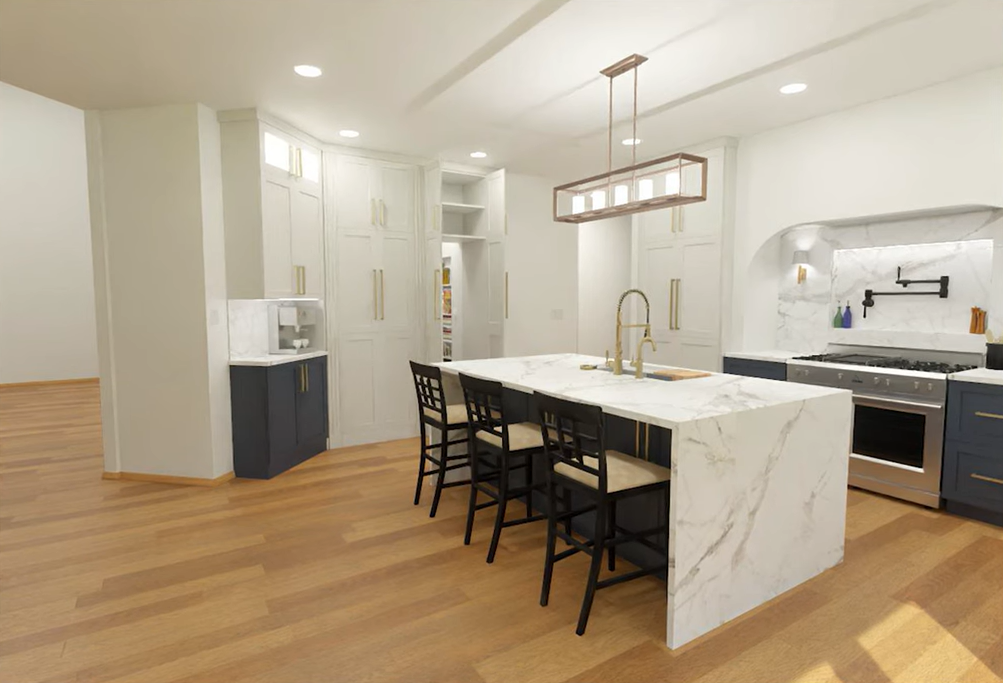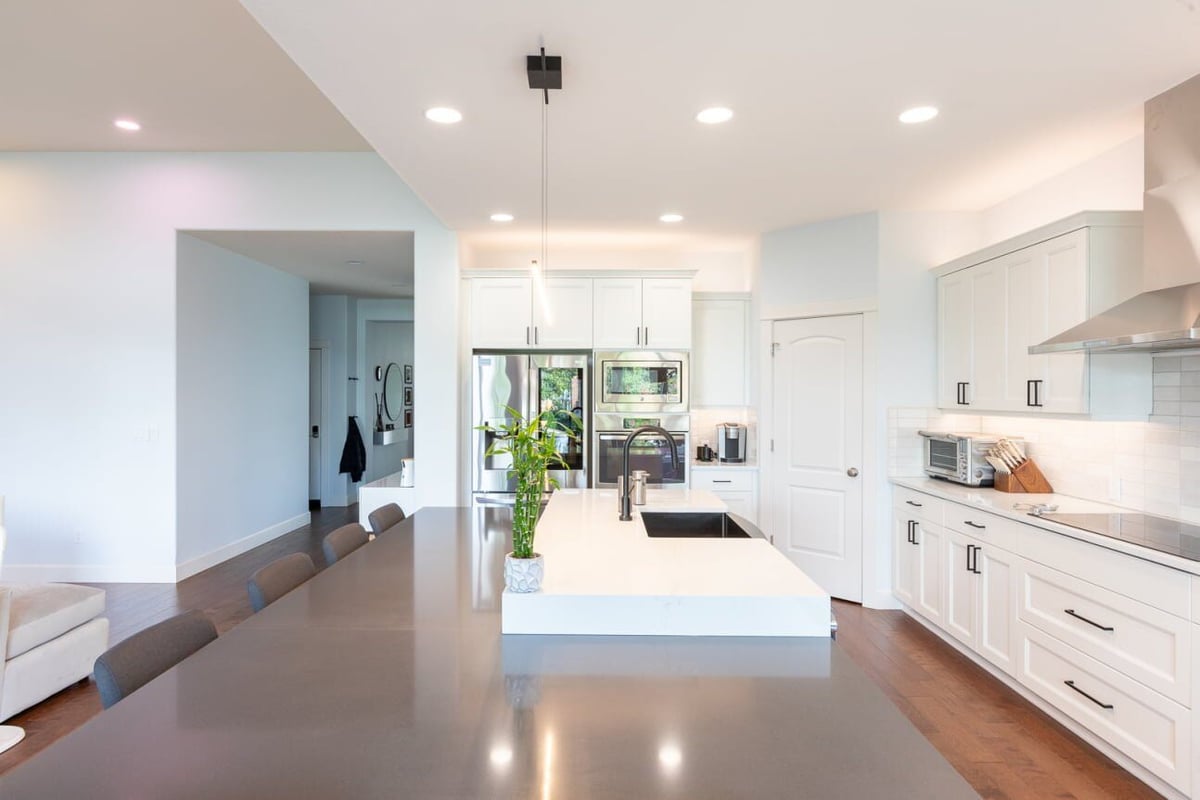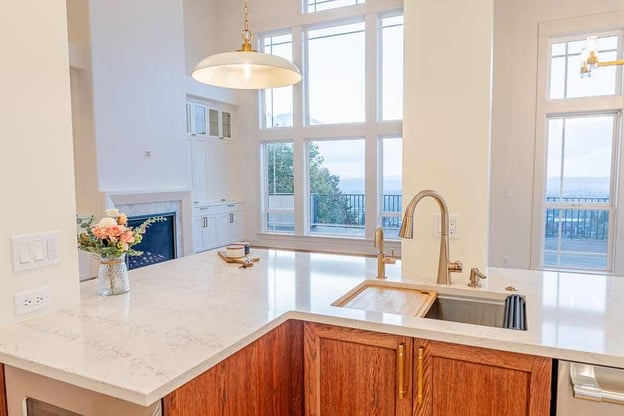
Ever wondered how magazine-worthy kitchens maintain their sleek look without visible outlets? The secret lies in strategic placement using angled power strips – a game-changing solution we’ve implemented in hundreds of Portland kitchens.
In this guide, you’ll discover how to eliminate unsightly outlets while maintaining all the functionality your modern kitchen demands. Plus, see real examples from our recent kitchen remodels.
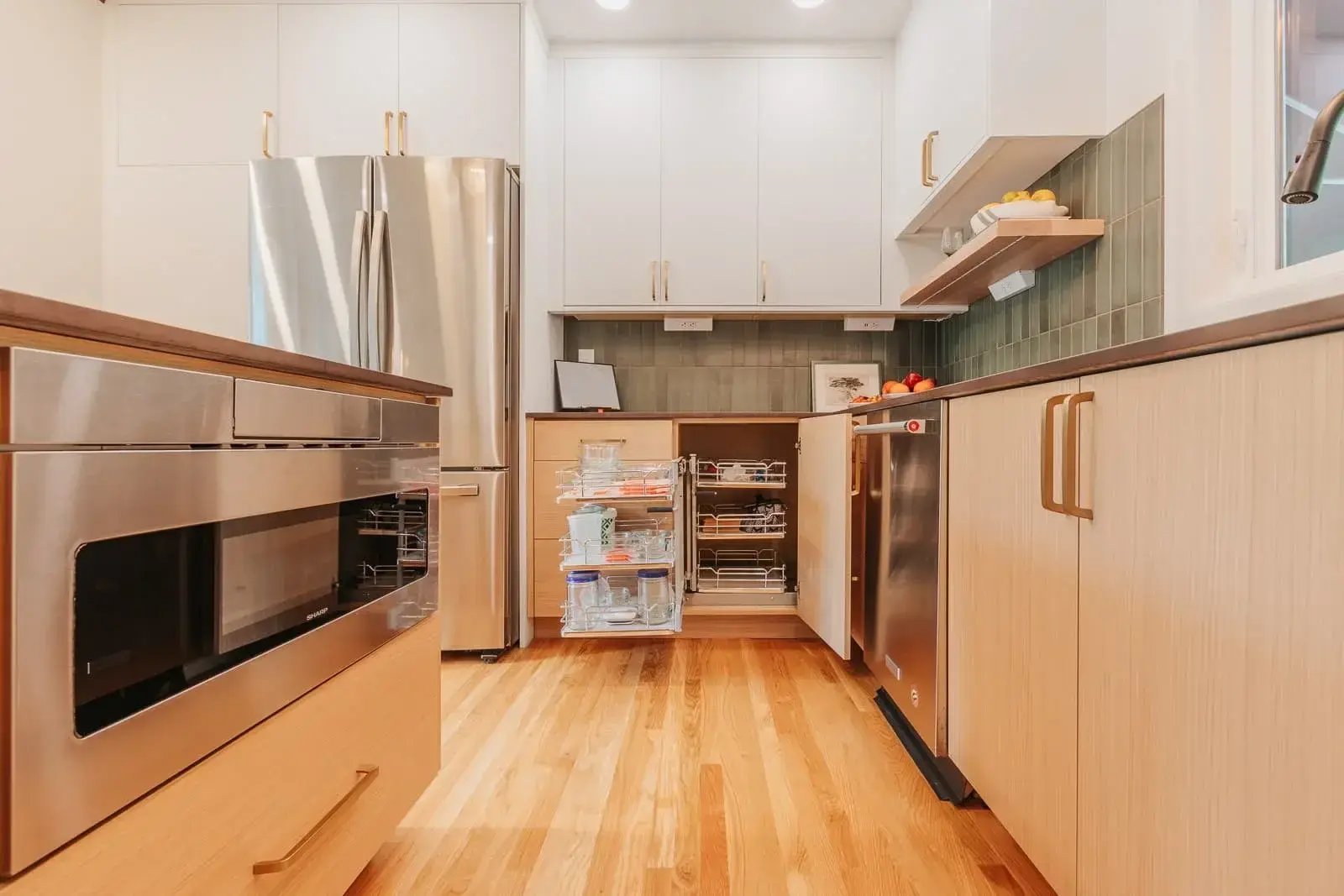
Why Use Angled Power Strips?
Having enough outlets in your kitchen is critical, especially if you love cooking with multiple appliances. But a highly visible outlet stuck on the side of a beautiful island or backsplash can instantly detract from your carefully designed space. Angled power strips offer an elegant solution that balances both form and function.
Kitchen outlets serve two essential purposes:
For practicality, you need conveniently placed outlets to power everything from your stand mixer and coffee maker to charging your devices. Modern kitchens demand more power access than ever before.
For aesthetics, the visual impact matters. You’ve likely seen stunning kitchen islands with jarring, contrasting outlets interrupting the clean lines and beautiful materials. These electrical necessities often become unwelcome visual interruptions in an otherwise perfect space.
Angled power strips solve this dilemma by providing the electrical access you need while maintaining the design integrity you want. Let’s explore three clever implementation methods that our clients love.

Types of Angled Power Strips
Angled power strips and some good kitchen design can make your space usable as well as beautiful. We use 3 kinds of angled power strips to get outlets exactly where clients want them, and to provide the most functionality.
1. Compact angled power strip
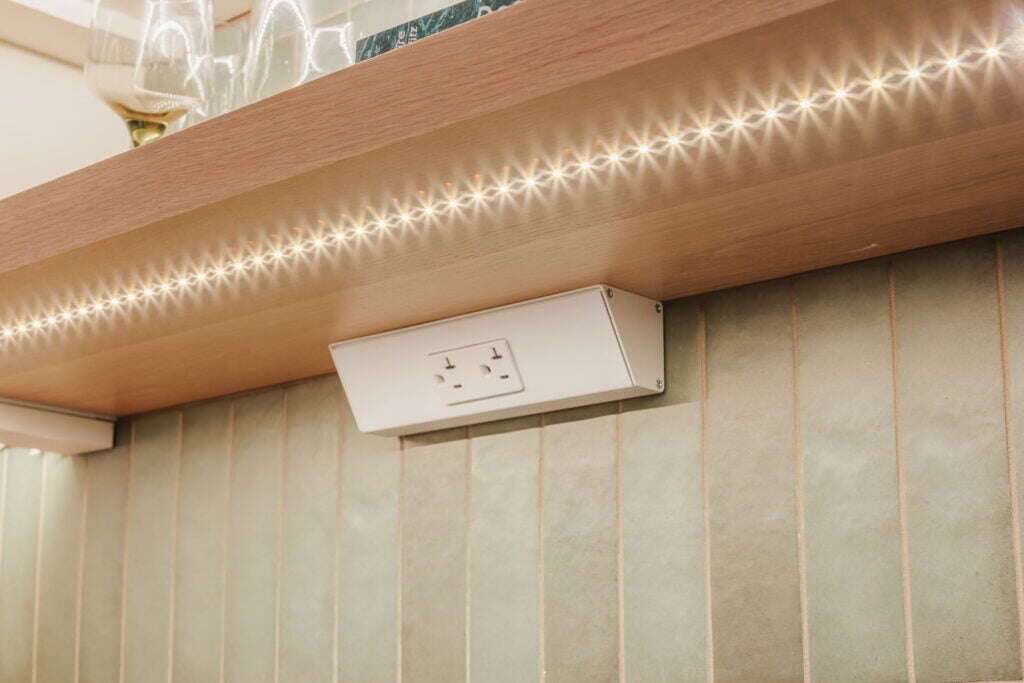
The first is the compact angled power strip. These are ideal for placing right under the countertops on kitchen islands. The outlets themselves stay hidden, but they provide easy access for all of your kitchen tools and electronics, especially if you’re using an appliance with a short cord. They also come in a few different colors if you want to match them to your countertops.
2. Under cabinet angled power strips
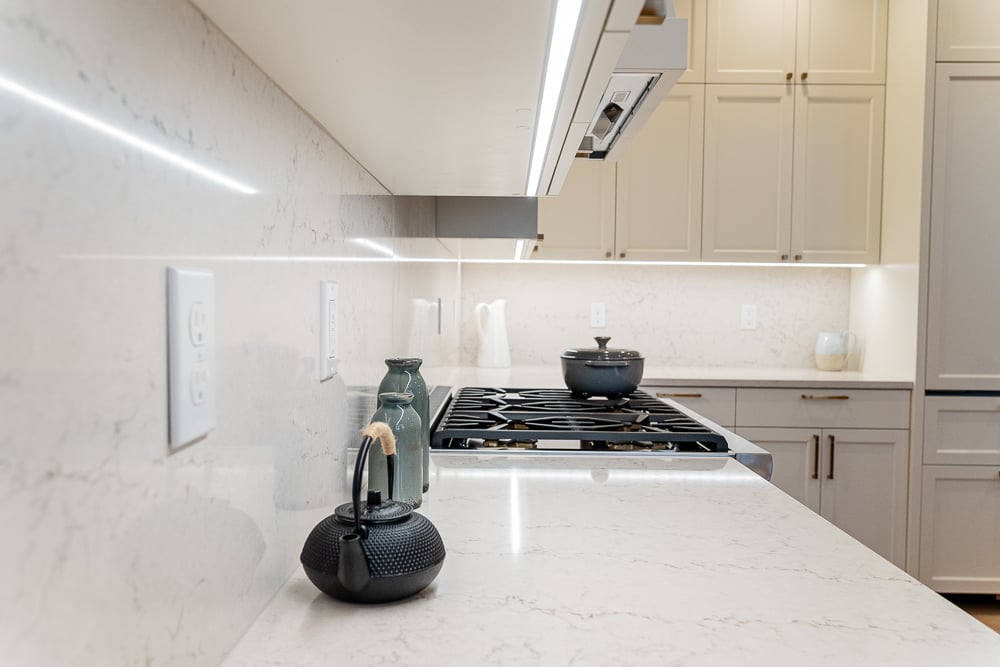
Another type that we’ll often recommend is an angled power strip that is combined with your under-cabinet lighting.
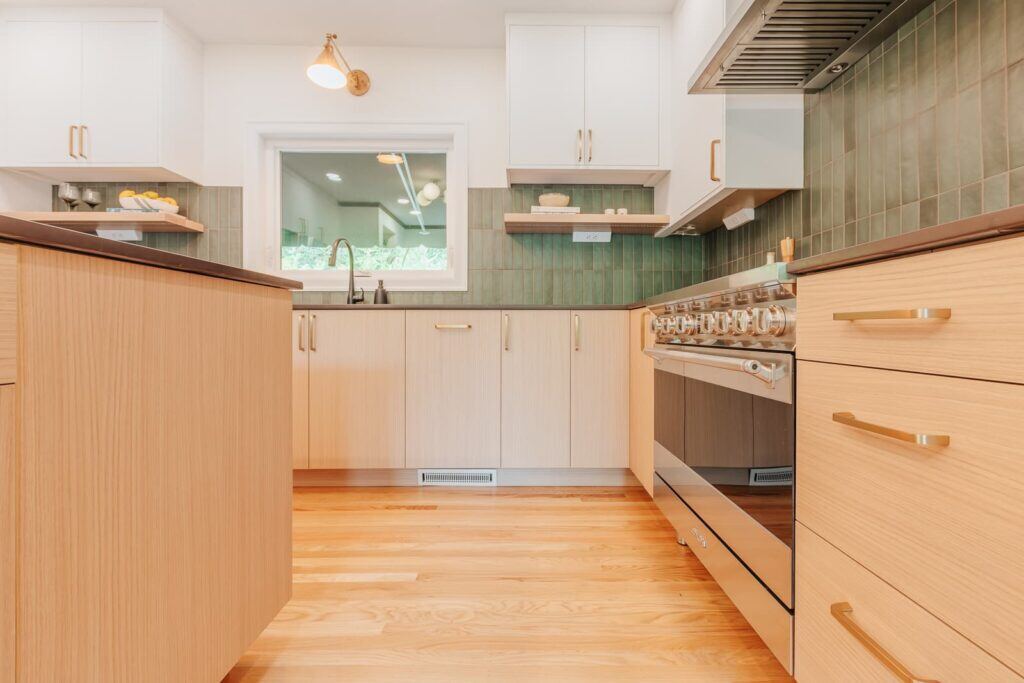
These are very convenient because wherever you’re working along the cabinets, you have ready access to a series of outlets. This configuration can be great for a counter breakfast area with a coffee machine, toaster, and blender side-by-side for example.
Plus, this solution removes any outlets from the backsplash, so you don’t need to worry about marring a pristine quartz or tile backsplash with any unsightly electrical outlets.
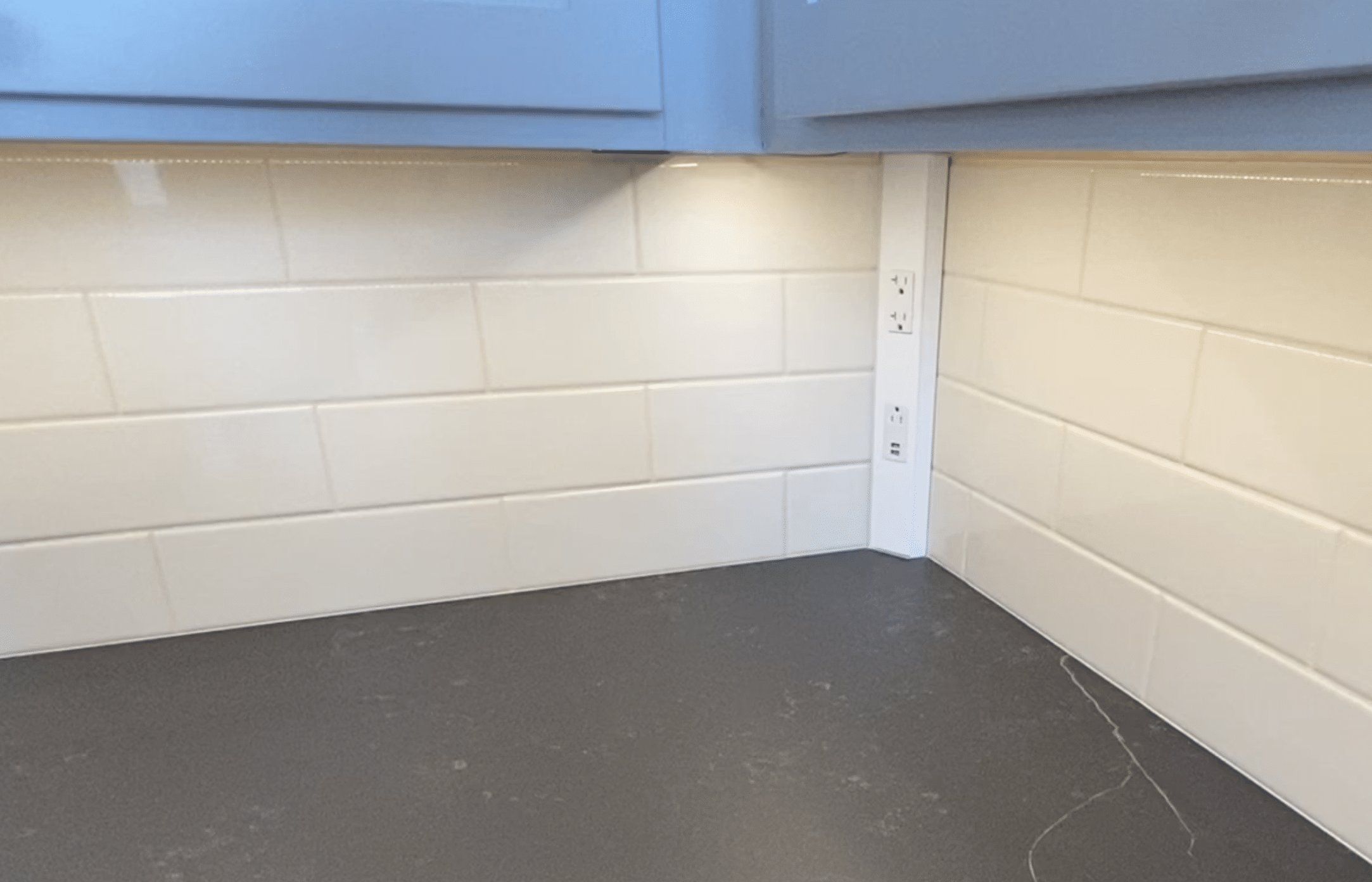
3. Corner angled power strip
The third common type of power strip that we’ll use is a larger one, mainly for areas like corners. These strips can contain features beyond just the outlets, like USB plugs or switches to make them even more functional.
These work especially well with light, bright kitchen, as a light-colored corner power strip can sort of disappear among the overall palette of the kitchen. They can also be ideal inside cabinets, if you really want the outlets out of the way.
How to Incorporate Angled Power Strips in Your Kitchen
✓ New Construction: Plan power strip locations during the design phase
✓ Remodeling: Easily retrofit angled power strips during your renovation
✓ Existing Kitchen: Several options can be installed without major construction
Most homeowners are surprised to learn that adding angled power strips doesn’t add a ton of cost to your kitchen project, while dramatically improving both functionality and aesthetics.

Frequently Asked Questions
What is an angled power strip?
An angled power strip is a permanently installed row of electrical receptacles positioned at an angle for easier access and reduced visibility. In kitchens, these strips are commonly installed beneath upper cabinets to keep outlets off the backsplash while providing power along the countertop.
Are angled power strips allowed in kitchens?
Angled power strips can be used when the product, wiring, circuit protection, and placement comply with the locally adopted electrical code. In Oregon, receptacles serving kitchen countertops must be installed in, on, or above the countertop. A licensed electrician should confirm that the proposed installation satisfies current requirements.
Can electrical outlets be installed underneath kitchen cabinets?
Listed multi-outlet assemblies can often be installed beneath upper cabinets, above the countertop. This approach preserves an uninterrupted backsplash while keeping outlets close to countertop appliances. Placement should be coordinated with cabinet trim and lighting so the strip remains accessible without becoming visually prominent.
Can an outlet be installed underneath a kitchen island countertop?
Under Oregon’s current electrical code, an outlet within 24 inches below the countertop generally cannot serve the countertop. Depending on the design, a compliant alternative may include a listed receptacle installed in, on, or above the work surface. Requirements can change, so the final solution should be approved by the project’s licensed electrician and local inspector.
Can angled power strips be added to an existing kitchen?
Sometimes. The feasibility depends on the existing wiring, available circuit capacity, cabinet construction, and access behind the finished surfaces. Because adding an outlet or new wiring generally requires an electrical permit in Portland, installation is often easiest to coordinate as part of a larger kitchen renovation.
Design a Kitchen Where Every Detail Has a Purpose
Angled power strips may be a small feature, but their placement can meaningfully improve how your kitchen looks and functions. When outlets are considered alongside cabinetry, lighting, appliances, work zones, and countertop materials, they provide convenient access to power without interrupting the finished design.
That level of coordination is central to Lamont Bros.’ kitchen remodeling services. Our design-build team plans the visible finishes and behind-the-scenes details together, helping Portland-area homeowners create kitchens that support cooking, entertaining, and everyday routines.
If you are considering a kitchen remodel, meet with our team to discuss your space, priorities, and the design details that matter to you. We will help you understand your options and determine an appropriate next step for your project.
Explore More Kitchen Design Ideas:
-1.jpg)