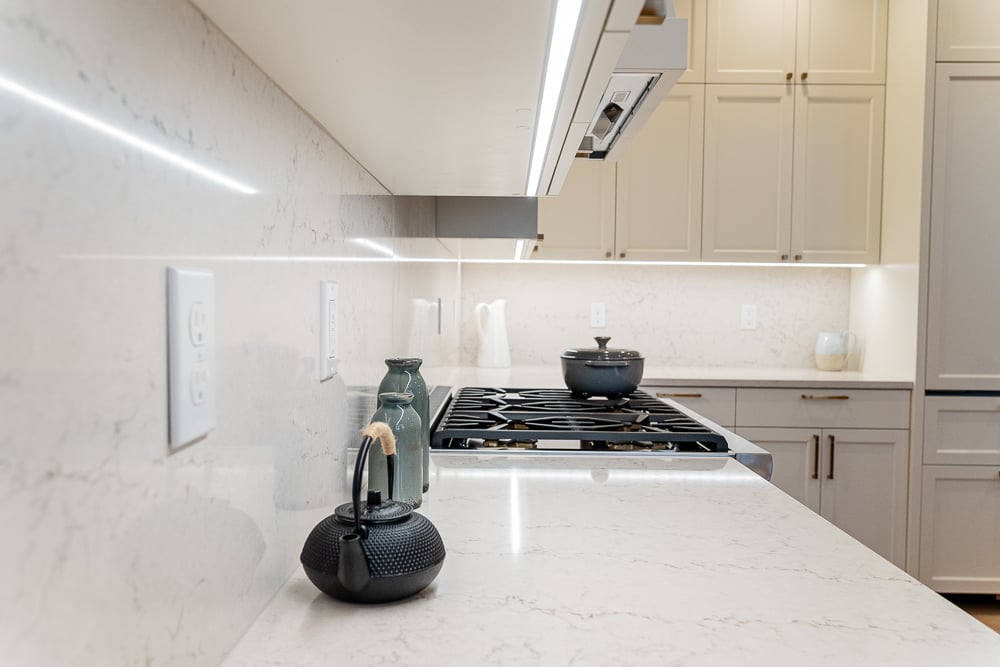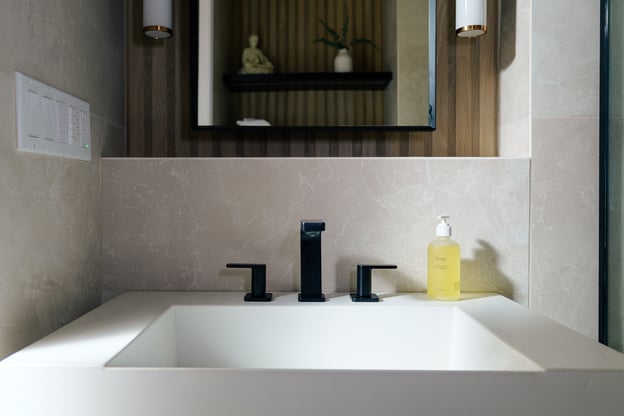
Chances are, you'll use the sink and faucet more than any other fixture in your bathroom—more than your shower, bathtub, or toilet. It may not be the most exciting decision in a remodel, but getting the material, mounting style, and finish right makes a bigger difference to how the space actually feels and functions than almost anything else in the room.
At Lamont Bros. Design & Construction, our design team has worked with hundreds of Portland-area homeowners to find the right sink and faucet combination for their space. This guide breaks the decision into two parts: the sink itself (material and mounting style), and the faucet (finish and format).
Key Takeaways
- Vitreous china and porcelain are the most affordable bathroom sink materials, typically $75-$300, while composite, glass, and custom sinks run $800 or more.
- Cast iron and metal sinks offer more design flexibility than ceramic but require extra structural support under the vanity due to their weight.
- Undermount sinks cost more to install than topmount but create a seamless look with no rim to catch water or crumbs.
- Chrome and stainless steel are the most affordable faucet finishes ($75-$250); black, brass, and brushed gold sit at the top of the range, often $600 or more.
- Widespread faucets separate the spout and handles across three holes, typically 8 inches apart, while single-hole faucets combine everything into one simpler, less expensive installation.
- Touchless faucets add a hygiene benefit but require a power source and cost more upfront than a standard manual faucet.
- Sink and faucet finishes don't need to match exactly—many designers pair complementary finishes rather than identical ones.
If you're just starting to plan your project, our Bathroom Remodel Buyer's Guide walks through the full remodeling process from start to finish, and our Bathroom Remodel Cost Calculator can give you a ballpark budget before you get into fixture-level decisions like the ones below.
Sink Materials
Vitreous China & Porcelain
The most common bathroom sink materials, vitreous china and porcelain both offer a glazed, high-gloss surface. Vitreous china is a glazed ceramic prized for its durability and clean finish; porcelain is a denser, finely grained ceramic with a similar classic look. Both come in oval or rectangular shapes and work as either topmount or undermount installations.
Advantages:
Cost-Effective: Lower material cost keeps these sinks affordable across a wide range of budgets.
Durability: Resistant to scratches and stains, well-suited to daily use.
Easy Installation: Standard shapes and sizing make for straightforward installs.
Challenges:
Design Range: The classic, glossy look may not suit a more modern or non-traditional bathroom aesthetic.
Feature Simplicity: These sinks generally skip built-in extras like integrated drainage features.
Cast Iron & Metal
Cast iron, copper, and bronze sinks bring more visual character and a heavier, more substantial feel than ceramic options. They're available in a wider range of shapes and configurations, including wall-mounted and semi-recessed installs.
Advantages:
Durability: Cast iron in particular is known for strength and longevity under frequent use.
Design Flexibility: A wider range of shapes and finishes than ceramic sinks, making these a good focal-point choice.
Easy to Clean: Despite the more detailed designs, these sinks typically clean up easily thanks to durable finishes.
Challenges:
Weight: Cast iron sinks are heavy enough to require additional structural support under the vanity.
Cost: More expensive than vitreous china or porcelain due to material and design complexity.
Installation: Wall-mounted and semi-recessed configurations can mean more involved (and more costly) installation.
Composite
Composite sinks blend natural stone dust with acrylic resins, producing a durable material that can mimic the look of natural stone at a lower cost and weight.
Advantages:
Durability: Resistant to chipping and staining, holding up well over time.
Consistent Look: A more uniform appearance than natural stone, without stone's maintenance requirements.
Challenges:
Color Range: Typically limited to neutral tones, which can constrain design flexibility.
Glass
Glass sinks make a strong visual statement and are available in a wide range of colors and textures, often serving as the centerpiece of a bathroom's design.
Advantages:
Visual Impact: Few materials make as strong a design statement as a glass vessel sink.
Range of Options: Available in nearly any color or texture, making it easy to match a specific design vision.
Challenges:
Care: Glass shows water spots and fingerprints more readily than ceramic or metal, and requires more frequent cleaning to stay looking its best.
Cost: Sits at the higher end of the sink material range.
Custom & Handmade
For a truly one-of-a-kind bathroom, handmade and custom-painted sinks offer patterns and irregularities that can't be replicated by a manufactured product.
Advantages:
Uniqueness: No two pieces are exactly alike.
Design Freedom: Fully tailored to the specific look you're after.
Challenges:
Cost: The highest tier of sink investment, reflecting the craftsmanship involved.
Care: Specialty materials may need more attentive, ongoing maintenance.
Sink Mounting Styles
Pedestal vs. Vessel
Pedestal sinks sit on a slim column that conceals the plumbing, offering a clean, classic look that works well in smaller bathrooms or powder rooms where counter space isn't a priority. Vessel sinks sit on top of a vanity or counter like a bowl, creating a more modern, statement-making look with the added benefit of usable counter space around the fixture. Pedestal sinks are the simpler, more space-efficient choice; vessel sinks offer more design impact and storage flexibility, but need a vanity to sit on. For a closer look at whether a pedestal sink fits your space, see our pedestal sink pros and cons guide.
Undermount vs. Topmount
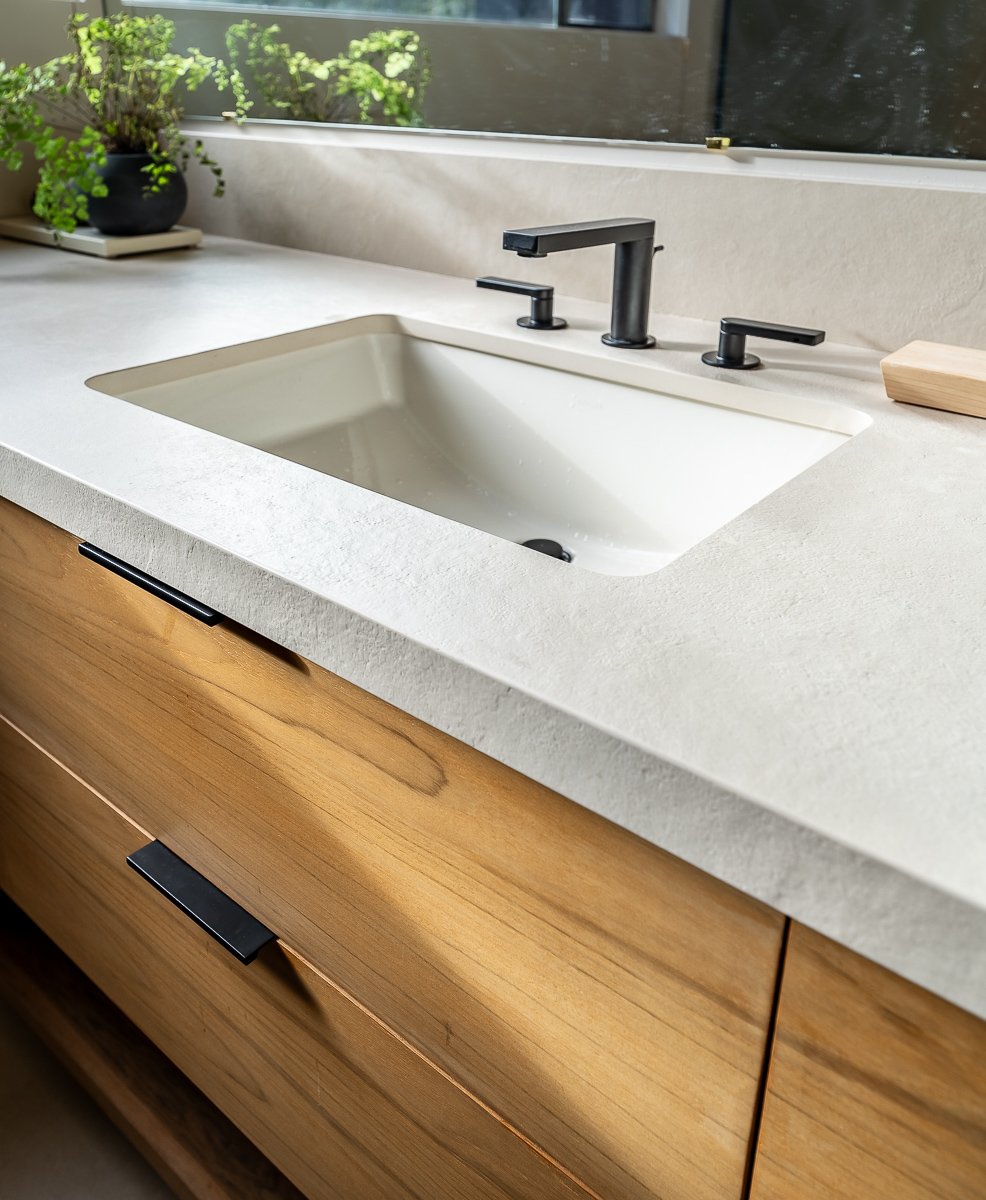
Undermount sinks are installed beneath the counter surface, creating a seamless look and making it easy to wipe crumbs and water directly into the basin without a lip to catch them. Topmount sinks sit in a cutout with the rim resting on top of the counter, which is a simpler, less expensive installation but leaves a visible seam where the sink meets the counter. Undermount is the more polished, higher-maintenance-friendly option; topmount is the more budget-friendly, easier-to-install one. Your countertop material also plays a role here—see our quartz vs. marble countertops guide for how that decision interacts with sink mounting style.
Faucet Finishes
Chrome
Chrome offers a mirror-like, plated finish that suits modern and traditional bathrooms alike. It's an affordable, widely available option, though it shows water spots and fingerprints more readily than other finishes.
Stainless Steel
Less lustrous than chrome but highly resistant to corrosion and wear, stainless steel holds up well to frequent use without visible tarnishing over time.
Brushed & Polished Nickel
Nickel finishes bring more visual warmth than chrome or stainless steel, at a moderate step up in price. Brushed nickel offers a matte texture; polished nickel is buffed to a brighter shine.
Oil-Rubbed Bronze
 A deep, rich finish that adds warmth and a more traditional character. Oil-rubbed bronze can show scratches over time and may need occasional polishing to maintain its look.
Black
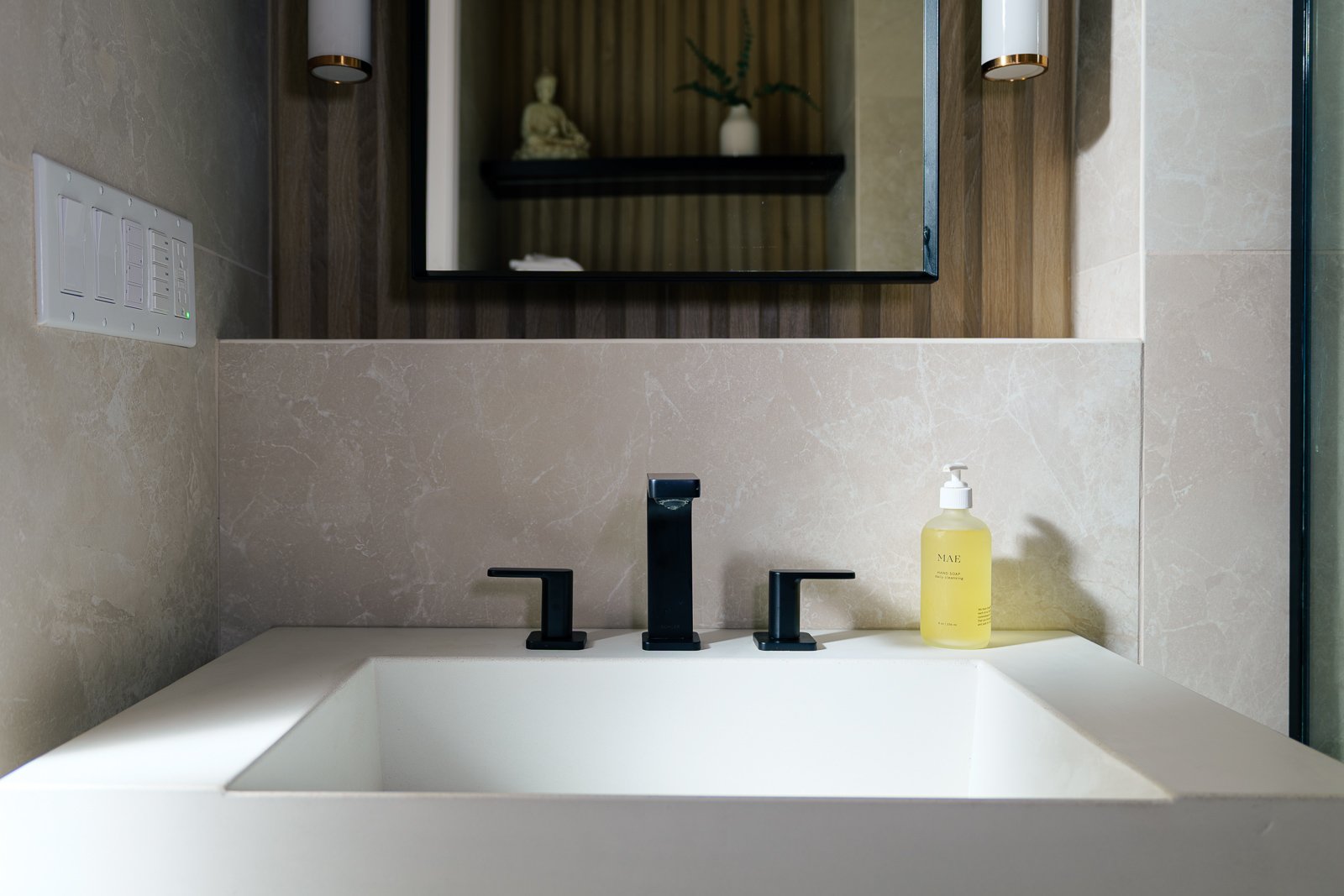
A bold, modern finish that creates strong contrast against lighter sinks and countertops. Black faucets show fingerprints and water spots more visibly than some other finishes, so plan for slightly more frequent cleaning.
Brass
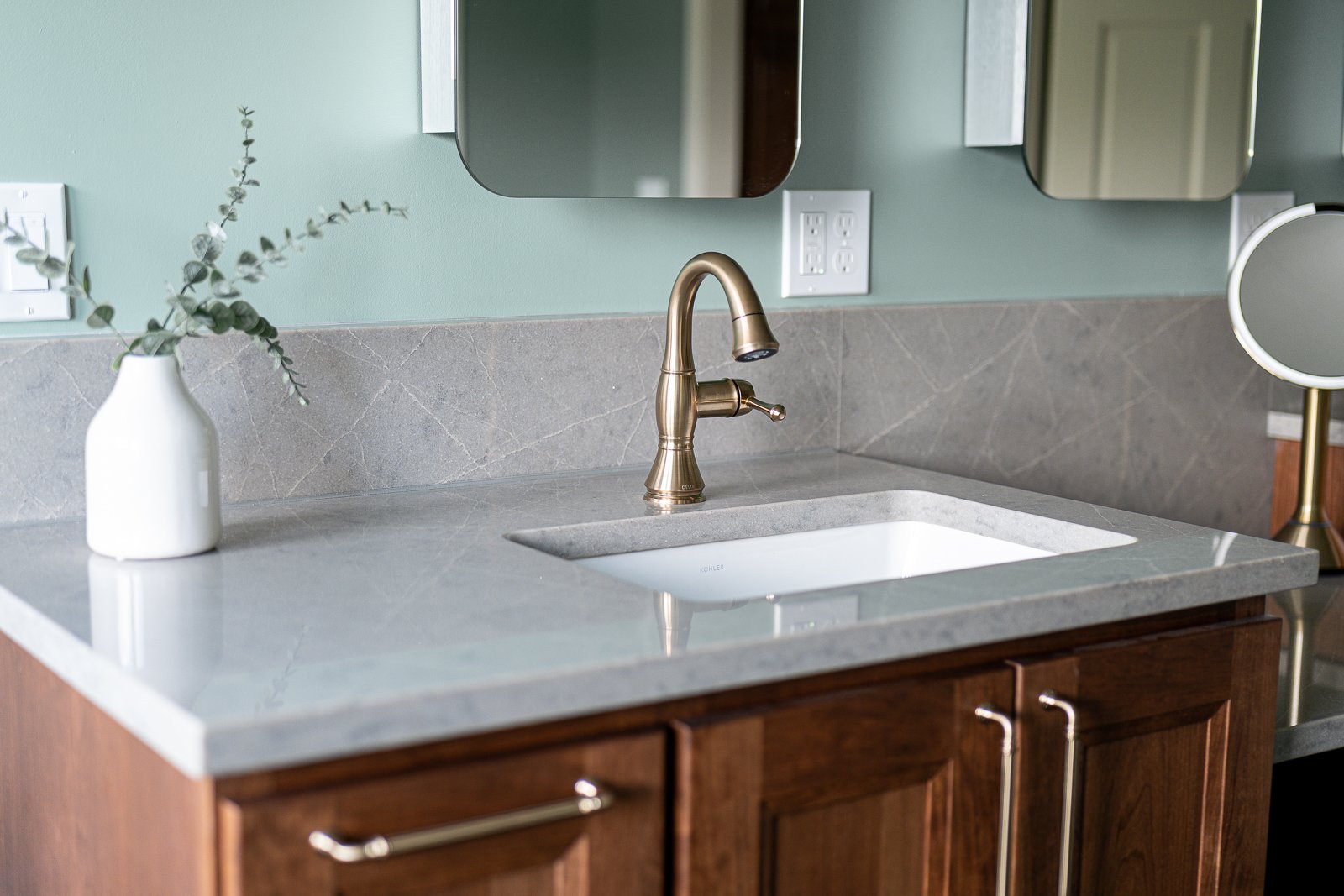
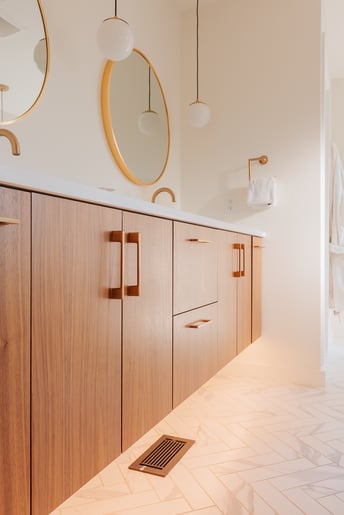
Brass brings warmth and classic character to a bathroom, available in both lacquered (lower maintenance, consistent shine) and unlacquered (develops a living patina over time) versions.
Brushed Gold
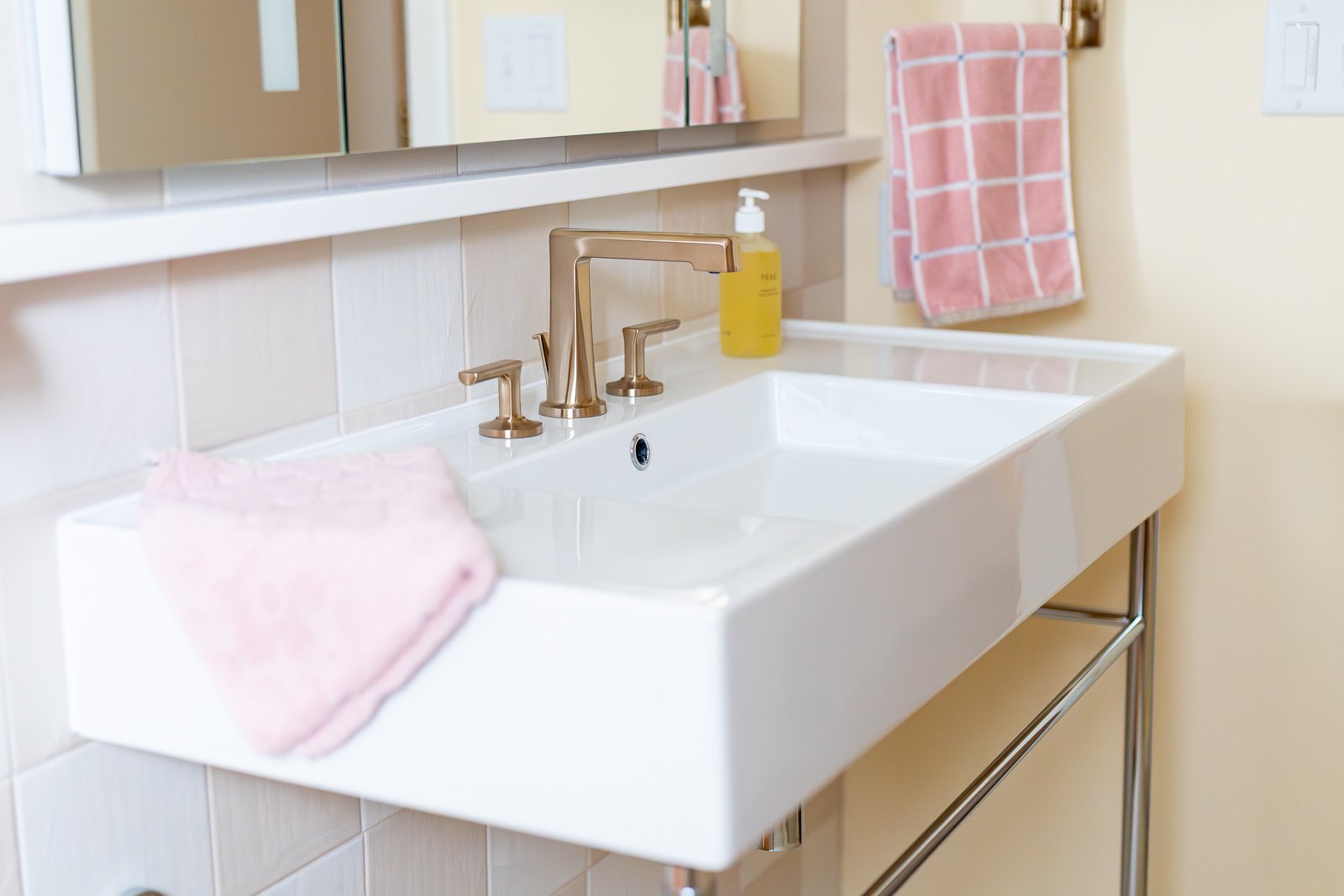
A softer, more subtle version of gold's classic elegance, brushed gold reflects light gently rather than with a hard shine, making it a popular choice for a high-end, understated look.
Faucet Formats
Single-Hole vs. Widespread
Single-hole faucets combine the spout and handle (or handles) into one fixture that mounts through a single hole in the sink or counter—a cleaner, more minimal look that's also simpler to install. Widespread faucets separate the spout and handles into individual pieces, typically spaced 8 inches apart, requiring three holes for installation. Widespread designs offer more traditional styling and easier cleaning around each component, but cost more to install and limit compatibility with certain sink styles.
Touchless Faucets
Touchless faucets use motion sensors to turn water on and off, a hygiene-focused upgrade that's become increasingly popular in kitchens and is now showing up more often in bathrooms as well. They cost more upfront and require a power source (battery or plug-in), but offer a genuine convenience and cleanliness benefit.
Cost by Tier
Good — $75-$300 (sink), $75-$250 (faucet)
Vitreous china or porcelain sinks paired with chrome or stainless steel faucets. Reliable, widely available, and easy to install—American Standard and Moen both offer solid entry-level options here.
Better — $300-$800 (sink), $250-$600 (faucet)
Cast iron or metal sinks with nickel or bronze faucet finishes. Kohler and Delta both have well-regarded mid-tier lines that balance style and durability at this level.
Best — $800+ (sink), $600+ (faucet)
Composite, glass, or custom sinks paired with black, brass, or brushed gold faucets, often with wall-mounted or waterfall-style features. Rohl and Hansgrohe are two names homeowners commonly recognize at this tier.
Sink and faucet costs are only one piece of the total project—see our Portland bathroom remodel cost guide for how these fixture costs fit into a full remodel budget.
| Tier | Sink Cost | Faucet Cost | Sink Materials | Faucet Finishes | Example Brands |
|---|---|---|---|---|---|
| Good | $75-$300 | $75-$250 | Vitreous china, porcelain | Chrome, stainless steel | American Standard, Moen |
| Better | $300-$800 | $250-$600 | Cast iron, metal | Brushed/polished nickel, oil-rubbed bronze | Kohler, Delta |
| Best | $800+ | $600+ | Composite, glass, custom | Black, brass, brushed gold | Rohl, Hansgrohe |
Considering a Bathroom Remodel?
Are you thinking about a bathroom remodel? We're happy to discuss your project. Simply schedule a conversation with us!
Frequently Asked Questions
Should my bathroom sink and faucet finishes match? Not necessarily. A faucet finish that complements rather than exactly matches the sink material (a brushed gold faucet with a white vitreous china sink, for instance) often reads as more intentional than a perfect match, though there's no wrong answer here beyond personal preference. If you're thinking about finish coordination across the whole room, our cabinet and door hardware finishes guide covers the same principles for cabinetry.
Is a vessel sink harder to keep clean than a pedestal or undermount sink? Vessel sinks can be slightly more prone to water pooling around the base where it meets the counter, so a quick wipe-down after use helps. It's a minor tradeoff for the design impact most homeowners choose vessel sinks for in the first place.
What's the difference between undermount and topmount installation cost? Undermount installation typically costs more than topmount, both because the sink itself often costs more and because the countertop needs to be finished and sealed at the cutout edge, which topmount installation doesn't require.
-1.jpg)