A dedicated beverage station is one of the most functional additions you can make to a kitchen. Whether it is a custom coffee bar built into the cabinetry, a wine and cocktail setup tucked into a butler's pantry, or a simple countertop station that keeps morning routines out of the main kitchen, the right setup can change how the space gets used every day.
Key Points
- Location determines how well a beverage station works. The best placement keeps it out of the main cooking zone so it can be used independently, ideally near water, power, and a refrigerator.
- You do not need a remodel to create a functional station. A tray, a floating shelf, or a bar cart can define a dedicated beverage zone in almost any kitchen without any construction.
- Storage is what makes or breaks a beverage station. A setup without enough storage for supplies, waste, and backup stock will look cluttered and feel inadequate within weeks of use.
- Outlets and plumbing need to be planned early. A beverage station with multiple appliances needs dedicated outlet capacity, and adding a sink or water line is far easier to do during a remodel than after.
- Built-in stations deliver the best results when designed from the start. A coffee bar or wine station built into the cabinetry looks more intentional, stores more, and functions better than a setup pieced together after the kitchen is finished.

Kitchen Beverage Station Ideas: What to Consider First
The right beverage station starts with an honest look at how the kitchen gets used. A household that runs on coffee every morning has different needs than one that entertains frequently with wine and cocktails. A family with kids may want something lower and more accessible.
Space and power are the two constraints that shape the design the most. A full built-in setup typically needs at least 24 to 36 inches of linear counter space plus cabinet storage above and below. Smaller setups can work in 18 inches or a single base cabinet. Either way, outlet access is non-negotiable. A coffee maker, espresso machine, electric kettle, and beverage fridge all draw significant power, and a station without enough dedicated outlets becomes a tangle of extension cords within a week. For anything beyond a simple countertop arrangement, those electrical and plumbing requirements need to be planned before cabinetry is designed around them.
Small Beverage Station Ideas
Countertop Coffee and Tea Station
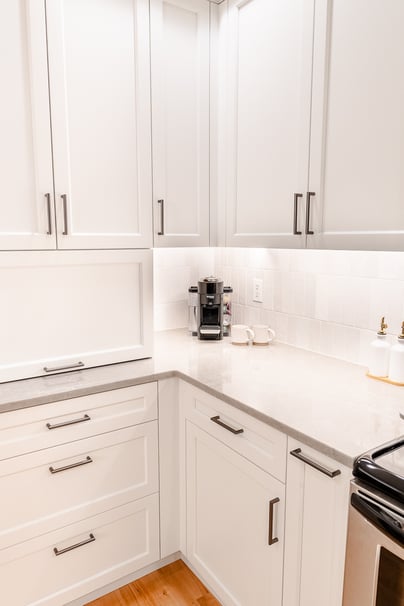
A countertop coffee and tea station is the most common small setup and one of the most used. The foundation is a coffee maker or espresso machine, a kettle for tea, and enough surface organization to keep supplies within reach. A wooden or marble tray corrals the appliances and defines the station's footprint. Canisters hold coffee beans, loose leaf tea, sugar, and pods. Mugs stack behind the appliances or hang from hooks mounted under the cabinet above. A small shelf mounted directly above the counter, if space allows, adds a second tier and keeps the counter from feeling crowded.
Bar Cart Drink Station
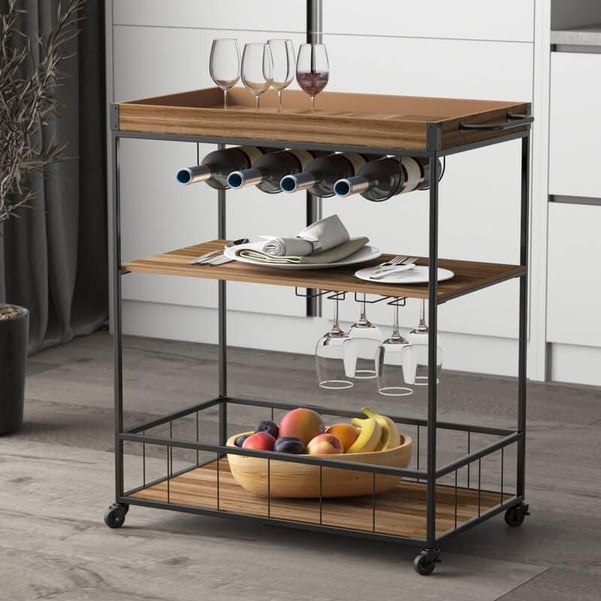
A bar cart requires no installation and can be repositioned when the layout needs to change. A two-tier cart typically holds bottles on the lower shelf, a cocktail shaker, and tools on the upper. A three-tier version adds space for a small ice bucket, mixers, or a compact wine rack. Bar carts work best positioned near the dining area or the entertaining side of the kitchen rather than tucked in a corner. Styled well, a brass or matte black cart reads as a deliberate design choice rather than a workaround.
Floating Shelf Beverage Station
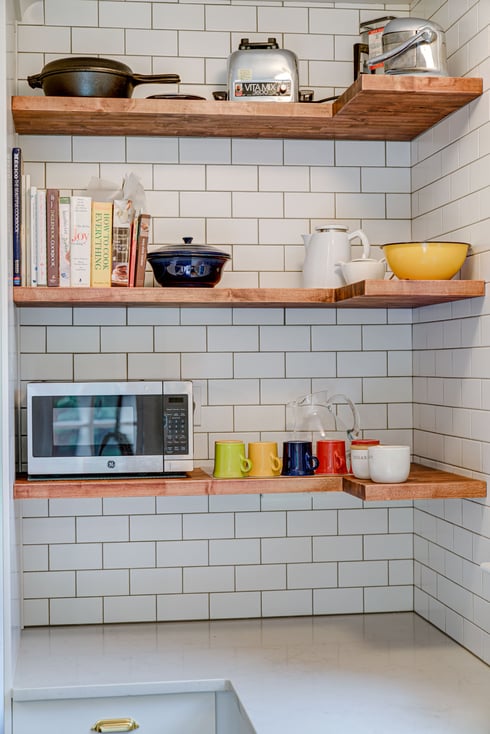
A pair of floating shelves above a narrow stretch of counter creates a dedicated beverage zone without construction. The lower shelf holds mugs, glasses, or bottles within easy reach. The upper shelf stores backup supplies or a small plant. Open-grain walnut, white oak, or painted shelves that match the cabinetry all integrate cleanly depending on the aesthetic.
Tray-Based Station
The most minimal choice: a defined section of existing counter reserved for beverages, anchored by a tray. A 14 by 18-inch tray holds a coffee maker, a small container of pods or ground coffee, and two or three frequently used mugs. The tray defines the station visually, makes cleaning easier since it lifts out entirely, and keeps the setup from spreading across the counter.

Built-In Kitchen Beverage Station Ideas
A built-in beverage station integrates into the cabinetry rather than sitting on top of it. The result is more storage, a cleaner look, and a setup that functions as a permanent part of the kitchen.
Along a Kitchen Wall or Cabinet Run
An underused stretch of perimeter cabinetry or a dedicated section of open wall is the most common location for a built-in beverage station. Upper cabinets provide closed storage for glassware and supplies, a countertop gives workspace, and base cabinets or a drawer stack below handle everything else. An outlet strip or pop-up outlet in the counter keeps appliance cords managed. The cabinetry color or countertop material can be used to set the zone apart visually from the rest of the kitchen.
In a Kitchen Island
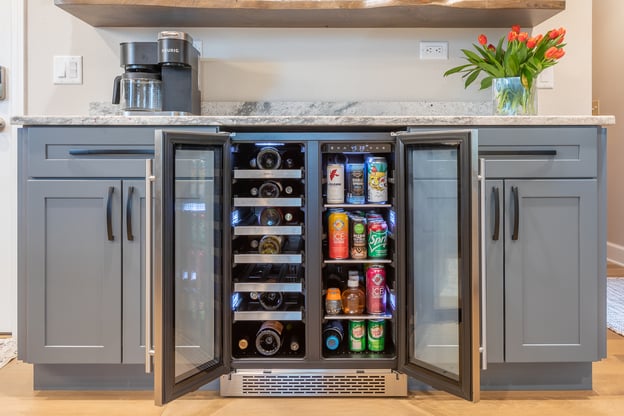
Building a beverage station into the kitchen island's seating side keeps drinks accessible to guests without pulling them into the cooking zone. An undercounter beverage fridge is the most common addition here, sized at 15 inches for tighter islands or 24 inches where space allows. A 24-inch unit holds roughly 100 to 180 cans depending on the model. This setup works best when the island is large enough that beverage storage does not compete with food prep on the same surface.
In a Scullery Kitchen or Walk-In Pantry
For larger homes with a scullery kitchen, butler's pantry or a substantial walk-in pantry, moving the beverage function out of the main kitchen entirely is worth considering. A butler's pantry naturally accommodates a sink, an undercounter fridge, open shelving for glassware, and counter space for mixing and serving, all without competing with cooking. Walk-in pantries can serve the same purpose on a smaller scale with a countertop section and dedicated shelving for beverages and bar supplies.
Coffee Bar Setup
A built-in coffee bar typically consists of a dedicated countertop section, upper cabinets sized for mugs and glassware, and base cabinets or drawers for supplies, pods, filters, and backup stock. The countertop material can match the main kitchen or contrast it: butcher block or marble against painted cabinetry is a common approach in high-end kitchens. If designed around an espresso machine, the upper cabinet depth may need to be reduced to accommodate the machine's height, and a dedicated water line can eliminate manual filling. Under-cabinet lighting is both functional and one of the details that makes the space feel finished.
Wine and Cocktail Station
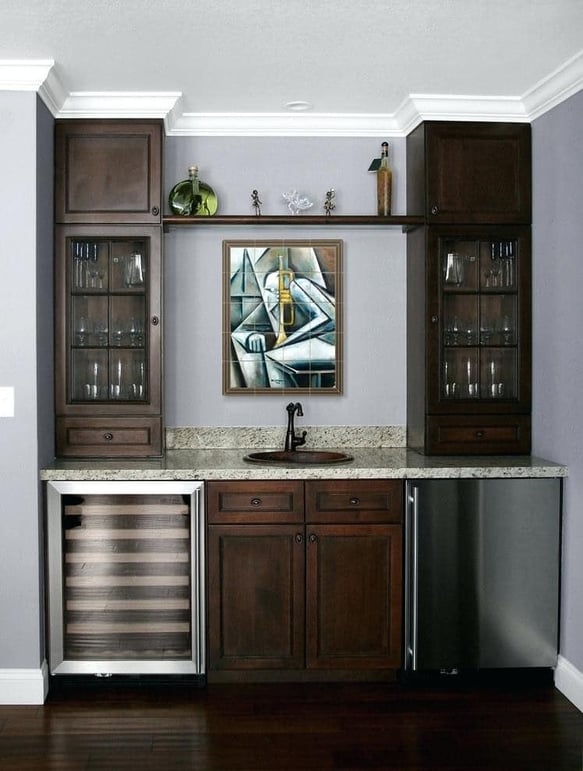
A built-in wine and cocktail station typically combines an undercounter wine fridge, open shelving or glass-front cabinets for stemware, and counter space for mixing and serving. A 24-inch wine fridge holds roughly 45 to 55 standard bottles depending on the model. For households with a serious collection, a dual-zone unit with separate temperature controls for red and white is worth the upgrade. Cocktail supplies, a cutting board, and a bar tool set live in a dedicated drawer below. Adding a small bar sink, typically 9 to 18 inches wide, makes the station fully self-contained. A sink requires supply lines and a drain, so it is best planned when a remodel is already opening walls.
Beverage Station Storage and Organization
Cabinets and Drawers
Base cabinets with deep drawers are ideal for organizing pods, filters, bar tools, napkins, and backup supplies. Upper cabinets with adjustable shelves accommodate different mug heights, bottle sizes, and glassware. Glass-front doors keep the storage visible while containing the visual noise. Pull-out shelves make deep storage accessible without digging, and drawer dividers keep bar tools and small accessories organized.
Open Shelving
Open shelving keeps mugs and glassware within reach and allows the display of items that contribute to the design: a ceramic canister set, a small plant, or a collection of bar books. The trade-off is dust and visual clutter. Open shelves require more discipline to maintain than closed cabinets.
Bins, Labels, and Waste
Labeled containers for coffee, tea, sugar, and sweeteners save time every morning. Woven baskets or wire bins inside cabinets group like items together. A pull-out bin inside a base cabinet handles waste, including used pods, bottle caps, and corks, without putting a trash can on the floor. A dual-compartment pull-out handles trash and recycling in the same footprint.
FAQs About Beverage Station Ideas
Is a beverage fridge worth it?
For households that entertain regularly or want to free up space in the main refrigerator, yes. A 15 or 24-inch undercounter beverage fridge keeps cold drinks accessible at the station without pulling from the main fridge. For households where cold drink volume is low and refrigerator space is not an issue, it is a nice addition but not a necessity.
What is the difference between a coffee station and a beverage station?
A coffee station is focused specifically on coffee and tea prep: the machine, the kettle, the mugs, and the supplies. A beverage station is broader and may include cold drinks, a bar or cocktail setup, a wine fridge, or a combination. Many households start with a coffee station and expand it into a full beverage station as the space and the remodel allow.
Does a beverage station need plumbing?
Not necessarily. A station with countertop appliances and a beverage fridge needs only electrical. Adding a prep sink requires supply lines and a drain, which means routing new plumbing or positioning the station close to an existing plumbing wall. If a remodel is already underway, adding a sink at that stage is far less disruptive and expensive than doing it later.
What is the difference between a wet bar and a dry bar?
A wet bar has a sink with running water for rinsing glasses, filling ice buckets, and prepping garnishes. A dry bar has no plumbing and relies on the nearby kitchen sink. Dry bars are simpler and less expensive to build. Wet bars are more functional for entertaining but require a plumbing connection, making them a better fit for a planned remodel.
Can you add a beverage station to a small kitchen?
Yes. A tray-based countertop arrangement, a bar cart, or floating shelves can all function as a dedicated beverage zone without impacting the layout. For a built-in option, a single base cabinet with an undercounter fridge and a small section of counter above is enough in a compact kitchen.
Planning a Beverage Station for Your Kitchen?
A beverage station works best when its cabinetry, storage, appliances, plumbing, and electrical needs are coordinated with the rest of the kitchen. Early planning also helps the station support daily routines without interrupting the primary cooking area.
See how a dedicated beverage and snack station was incorporated into this Lake Oswego kitchen remodel, review our kitchen remodeling services, or read about the kitchen remodel process.
When you are ready to discuss your kitchen, schedule a consultation with Lamont Bros. Design & Construction. Our team will consider the beverage station as part of the kitchen’s complete layout, function, and design.