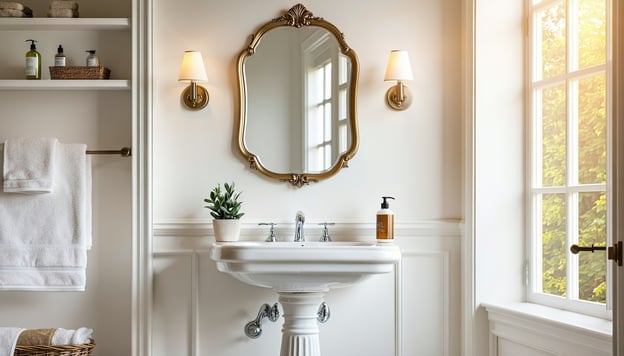
Pedestal sinks work best in powder rooms and small bathrooms where open floor space matters more than countertop and cabinet storage. Their compact form can make a tight room feel less crowded, and their distinctive shape can complement both traditional and modern homes.
The tradeoff is practicality. Pedestal sinks provide little counter space, no built-in cabinet storage, and less flexibility for concealing plumbing. Replacing a vanity with one may also require plumbing changes, wall reinforcement, and repairs to previously covered flooring or wall surfaces.
For a primary or family bathroom, a vanity is usually the more useful choice unless storage is available elsewhere. For a powder room, guest bathroom, or small bathroom, a well-proportioned pedestal sink can be an excellent fit.

What Is a Pedestal Sink?
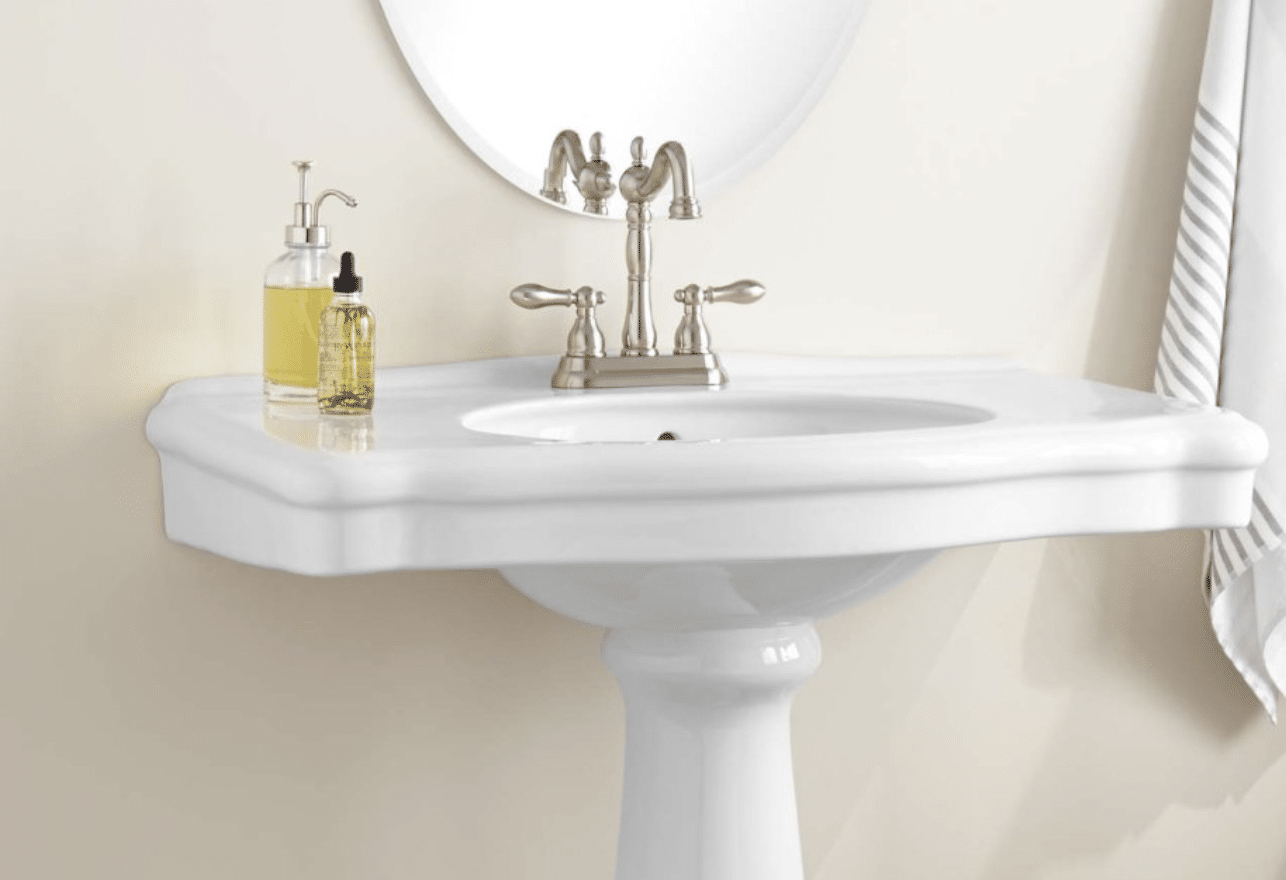
A pedestal sink consists of a basin and a narrow base positioned beneath it. The basin is generally secured to the wall, while the pedestal conceals some of the plumbing and supplies varying degrees of support. The exact mounting method depends on the model and manufacturer.
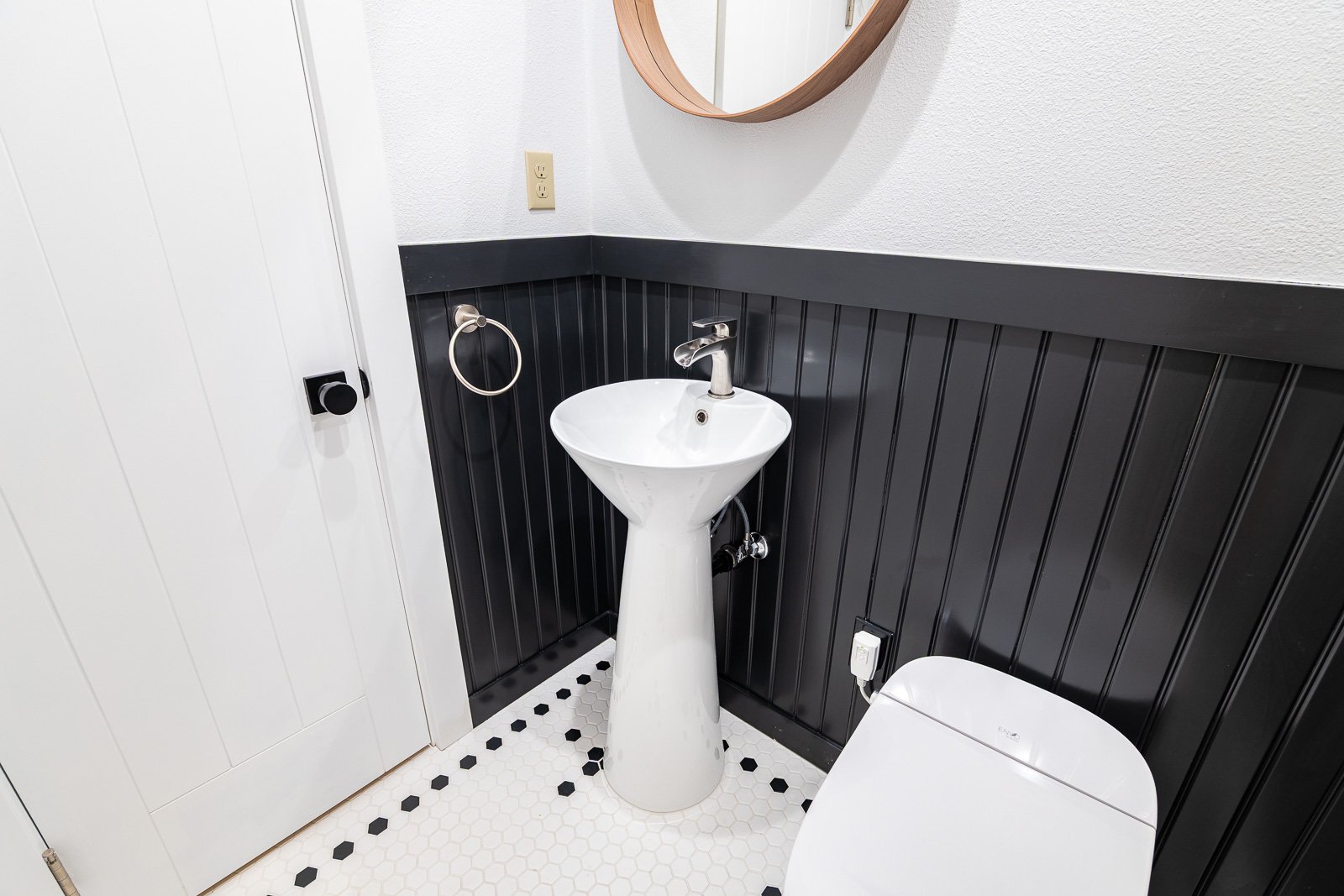
This construction distinguishes a pedestal sink from a vanity, where the basin rests on or within a cabinet. It also differs from a wall-mounted sink, which has no base beneath the basin.
Pedestal sinks became common in American homes during the early 20th century, when bathrooms tended to be smaller. Their compact proportions still make them well suited to many Portland Craftsman, bungalow, and Victorian homes. Contemporary versions are also available for bathrooms with a cleaner, more modern design.
Pedestal Sink Pros
They Preserve Open Floor Space
The strongest reason to choose a pedestal sink is its compact footprint.
A vanity occupies the full area beneath the basin, while a pedestal leaves most of that floor visible. The room may feel more open because the eye can see beneath and around the sink.
This can make a meaningful difference in a powder room, narrow bathroom, or layout where the sink sits near a door, toilet, shower, or circulation path.
The amount of space saved depends on the model. Some pedestal sinks are extremely shallow, while others have wide basins that project almost as far into the room as a small vanity. Always compare actual dimensions rather than assuming every pedestal sink is compact.
They Can Suit the Architecture of the Home
Pedestal sinks are often associated with traditional bathrooms, but the category includes more than ornate porcelain fixtures.
Rounded basins and detailed pedestals can complement Craftsman, Victorian, and other older homes. Square basins, straight-sided columns, and restrained forms can work in transitional or modern bathrooms.
The sink should relate to the room’s proportions, fixtures, mirror, lighting, tile, and architectural character. Choosing a pedestal solely because the bathroom is small can still produce a result that feels out of place.
They Can Make the Floor Easier to Clean
Without a cabinet resting on the floor, there are fewer edges and corners where dust, hair, and moisture can collect.
The exposed floor is generally easier to sweep and mop than the narrow gaps beside a vanity. This can be especially useful in powder rooms and guest bathrooms that receive frequent use.
The tradeoff is that exposed plumbing and the area behind the pedestal may require more detailed cleaning.
The Fixture May Cost Less Than a Vanity
A basic pedestal sink often costs less than a cabinet vanity with a countertop and sink.
That does not always make it the less expensive installed option. Plumbing relocation, wall reinforcement, faucet selection, floor repair, wall repair, and finished supply lines can add to the final cost.
Compare the complete installed scope rather than the price of the sink alone.
They Create a Clear Visual Focal Point
A pedestal sink has a recognizable shape and can stand on its own as a design feature.
In a powder room, where storage demands are low, the sink can support a stronger design idea without needing to solve every practical need of a full bathroom. Tile, wallpaper, lighting, mirror shape, and plumbing finishes can all be organized around it.
The result works best when the sink is selected as part of the room’s design rather than added as an isolated fixture.
Pedestal Sink Cons
They Provide Little Counter Space
Most pedestal sinks have enough surface area for hand soap and little else.
That may be sufficient in a powder room, but it can become frustrating in a bathroom used for brushing teeth, shaving, applying makeup, styling hair, or managing medications.
Some models have wider rims or built-in ledges, but they still provide less work surface than most vanities or console sinks.
Before choosing one, consider what normally sits beside the sink during a typical morning or evening. If several items need to remain within reach, a pedestal sink may not support the way the room is used.
They Have No Built-In Cabinet Storage
A pedestal sink does not provide drawers or an enclosed cabinet for toiletries, cleaning products, towels, or personal items.
Storage can be added through a recessed medicine cabinet, wall cabinet, shelves, freestanding furniture, or cabinetry elsewhere in the bathroom. Those options need to be included in the design from the beginning.
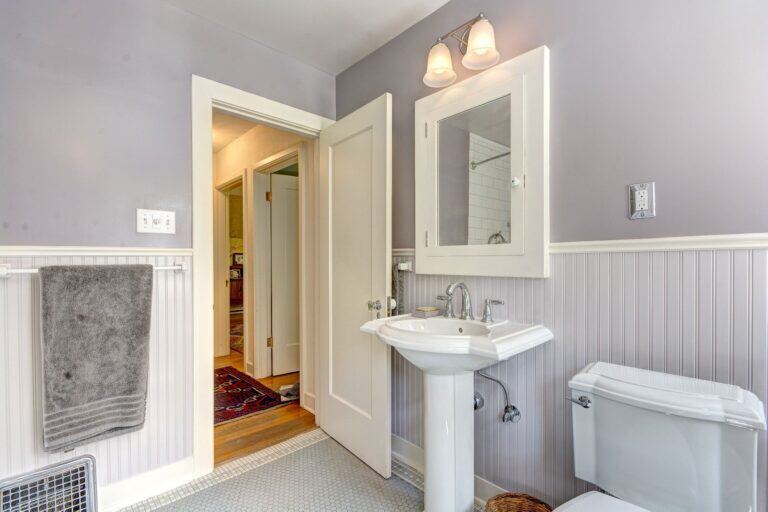
Adding several small storage pieces later can make the room feel more crowded than it would have with one well-designed vanity.
This is why pedestal sinks usually work better in powder rooms than in primary or family bathrooms.
Plumbing May Remain Visible
The pedestal may conceal the drain and supply lines from the front, but the plumbing can still be visible from the sides.
That makes pipe placement and finish more important. Misaligned valves, plastic drain components, or plumbing positioned too far from the wall can undermine the finished appearance.
Decorative supply lines, shutoff valves, and drain components are available in finishes that coordinate with the faucet. They cost more than basic concealed plumbing, so they should be included in the fixture budget.
Replacing a Vanity May Require Additional Work
A pedestal sink is not always a simple replacement for an existing vanity.
The old cabinet may be hiding unfinished flooring, damaged drywall, plumbing penetrations, or supply lines positioned for cabinet installation. Once the vanity is removed, those conditions become visible.
The new basin may also require solid blocking inside the wall. If the existing wall does not have support in the correct location, part of it may need to be opened and repaired.
Plumbing may need to move so the drain and supply lines fit behind the pedestal. These changes can make installation more involved than the fixture’s simple appearance suggests.
The Proportions May Not Fit a Large Bathroom
A small pedestal sink can look undersized beside a large walk-in shower, soaking tub, wide mirror, or expansive wall.
Two pedestal sinks can create symmetry, but they still provide little shared counter space or storage. A double vanity may produce better visual balance while supporting the daily needs of two people.
The sink should be scaled to the room and the other fixtures, not selected only because it fits the available wall width.
Installation and Repair Access Can Be Awkward
The pedestal, basin, supply lines, and drain components occupy a compact area. That can make some plumbing connections harder to reach during installation or repair.
The sink may need to be partially removed to reach certain components. Product quality and correct installation matter because the basin is secured to the wall and must remain stable during daily use.
Pedestal Sink vs. Vanity
The right choice depends less on style than on the work the sink area needs to perform.
| Consideration | Pedestal sink | Vanity |
|---|---|---|
| Best room type | Powder room, guest bath, small bathroom | Primary bath, family bath, high-use bathroom |
| Floor footprint | Usually smaller and visually open | Larger and more substantial |
| Counter space | Minimal | Moderate to generous |
| Built-in storage | None | Drawers or cabinets |
| Plumbing | May remain visible | Usually concealed |
| Cleaning | More exposed floor area | More cabinet edges and floor transitions |
| Installation | Simple when plumbing and wall support align | Often easier when replacing an existing vanity |
| Design effect | Distinct fixture and open appearance | Integrated sink, counter, and storage |
| Cost | Lower fixture cost, but added finish work may apply | Higher fixture cost, with storage included |
A pedestal sink is usually the better choice when the bathroom needs open floor space and has storage elsewhere. A vanity is usually better when the sink area must support daily grooming, shared use, or substantial storage.
What About a Console Sink or Floating Vanity?
A pedestal sink and a traditional cabinet vanity are not the only choices.
A console sink uses a basin supported by legs or a metal frame. Many models provide a wider counter, towel bar, or open shelf while preserving a lighter appearance.
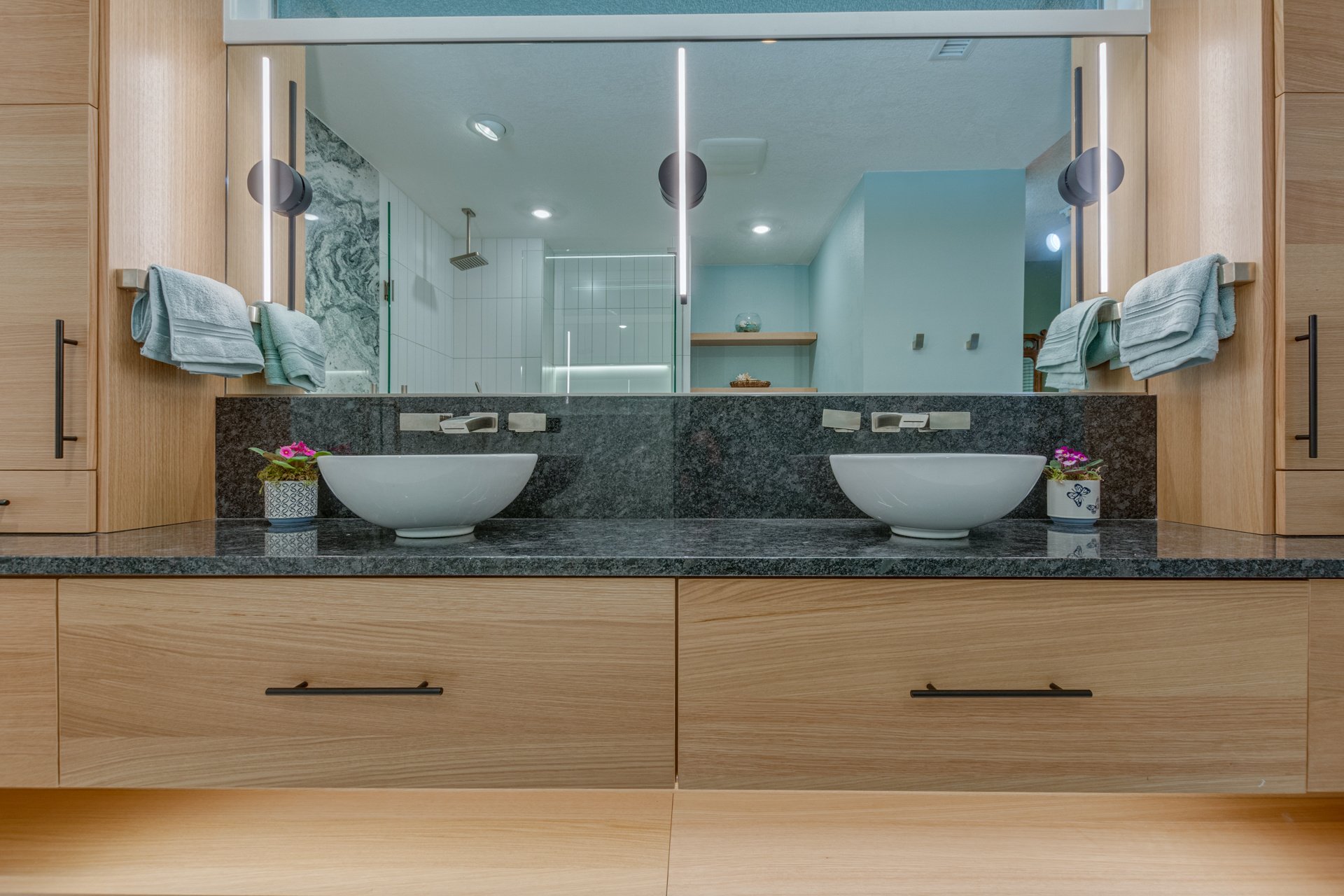
A floating vanity is mounted above the floor. It supplies enclosed storage while keeping more flooring visible, which can help a small bathroom feel less crowded.
A wall-mounted sink removes the pedestal entirely. It can be useful where floor clearance matters, but plumbing and wall support require careful planning.
Lamont Bros.’ guide to different types of bathroom vanities compares pedestal sinks, wall-mounted sinks, console sinks, cabinet vanities, and double vanities.
Where Does a Pedestal Sink Work Best?
Powder Rooms
A powder room is usually the strongest setting for a pedestal sink.
Guests need a place to wash their hands, but they rarely need large amounts of counter space or access to personal toiletries. A medicine cabinet or small wall cabinet may provide all the storage the room requires.
The smaller fixture can also leave more clearance around the toilet and door.
Guest Bathrooms
A pedestal sink can work in a guest bathroom when stays are short and storage is provided elsewhere.
Consider where guests will place a toothbrush, toiletry bag, towel, or change of clothes. A nearby shelf, cabinet, or bench may be necessary.
Small Full Bathrooms
A pedestal sink can preserve circulation in a tight full bathroom, but the storage tradeoff becomes more significant.
If the room is used every day, a compact vanity or console sink may provide a better balance between floor space and function.
Primary Bathrooms
A pedestal sink is rarely the most practical choice for a primary bathroom.
Primary bathrooms usually require more counter space, concealed storage, and room for two people’s daily routines. A vanity generally serves those needs better.
A pedestal may still work when the bathroom has a separate dressing area, large medicine cabinets, or built-in storage elsewhere.
How to Decide if a Pedestal Sink Is Right for Your Bathroom
Begin with the room’s daily use. A powder room used for hand washing has different requirements from a shared bathroom used for grooming, medication storage, and getting ready for work.
Next, account for storage. Identify where towels, toilet paper, cleaning products, toiletries, and personal items will go. Do not assume storage can be solved after the sink is installed.
Measure the fixture itself, including width, depth, basin height, and distance from the wall. Check door swing, toilet clearance, shower access, and the path through the bathroom.
Have the plumbing and wall construction evaluated before purchasing the sink. Confirm whether the existing drain and supply lines align with the pedestal and whether the wall has the required mounting support.
Finally, judge the sink as part of the entire room. Its shape, size, faucet, mirror, lighting, tile, and exposed plumbing should form one coherent design.
Frequently Asked Questions
Are pedestal sinks good for small bathrooms?
Yes, particularly when open floor space matters more than storage. Check the sink’s actual dimensions because some pedestal models are nearly as deep as compact vanities.
Do pedestal sinks need to be attached to the wall?
Most pedestal sink basins are secured to the wall. The pedestal conceals plumbing and may provide additional support, depending on the model. Follow the manufacturer’s mounting requirements.
Can you replace a vanity with a pedestal sink?
Yes, but the change may expose unfinished flooring, wall damage, and plumbing that was hidden by the cabinet. Plumbing relocation and wall reinforcement may also be required.
Are pedestal sinks cheaper than vanities?
The fixture often costs less than a vanity, countertop, and sink combination. The installed cost may rise if the project requires plumbing changes, finished supply lines, wall repair, or flooring repair.
How do you add storage around a pedestal sink?
A recessed medicine cabinet is often the cleanest solution. Wall cabinets, shelves, nearby built-ins, and freestanding furniture can also work when they are included in the bathroom layout.
Are pedestal sinks outdated?
No. A pedestal sink can fit traditional, transitional, or modern bathrooms. The more important question is whether its proportions, storage limitations, and plumbing requirements suit the room.
Choose the Sink That Fits the Room
The sink affects how people move through the bathroom, where daily items are stored, and how the entire room feels. A pedestal sink can be an excellent decision when its open footprint and architectural character serve the space. It becomes a poor decision when the room needs storage and counter space that have not been supplied elsewhere.
Lamont Bros. Design & Construction designs bathrooms around the people who use them, balancing layout, storage, fixture selection, materials, and construction requirements before building begins.

-1.jpg)